
The single biggest factor in whether an epoxy floor lasts 15 years or fails in 3 isn’t the brand of epoxy, the color you choose, or even the warranty — it’s the contractor’s preparation standards and material quality. In San Antonio‘s competitive flooring market, the range of contractor quality is enormous. Homeowners in Helotes, Stone Oak, and across the metro have called CB1 Specialty Concrete after their previous floor failed, and the story is almost always the same: they chose the lowest quote without asking the right questions. This guide tells you exactly what to ask — and what answers should send you to the next contractor.
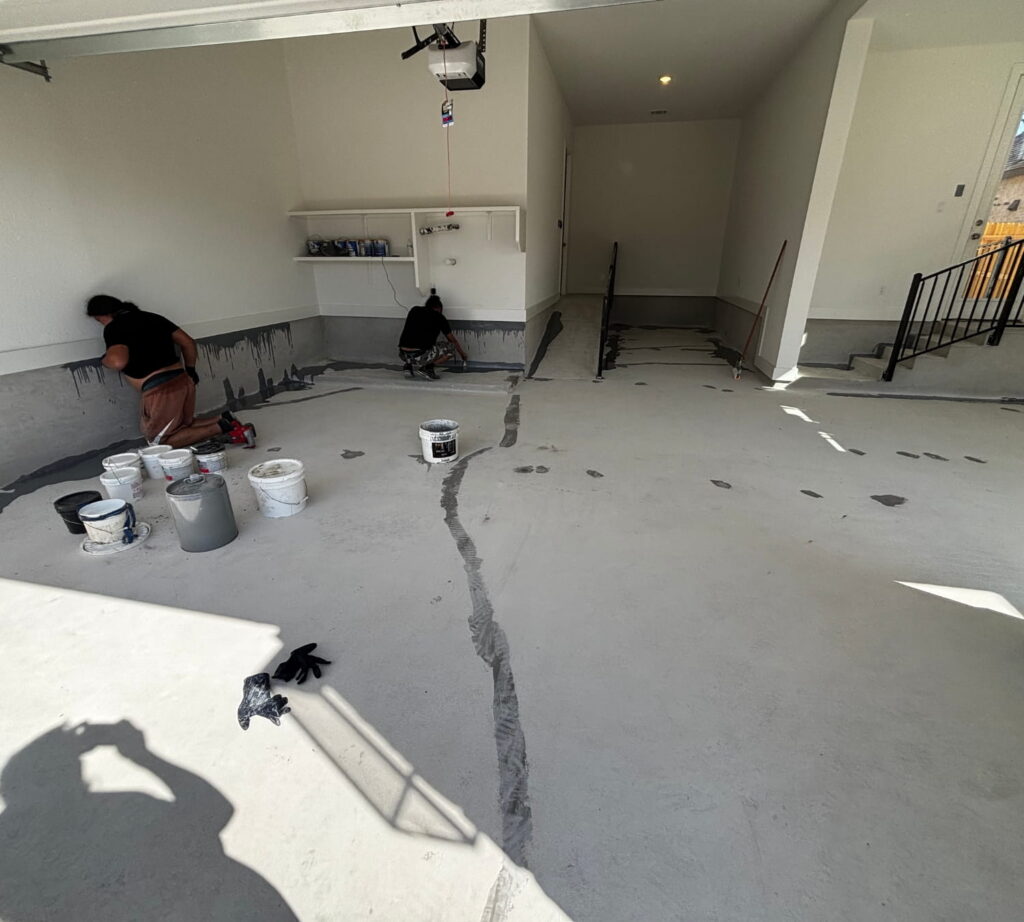
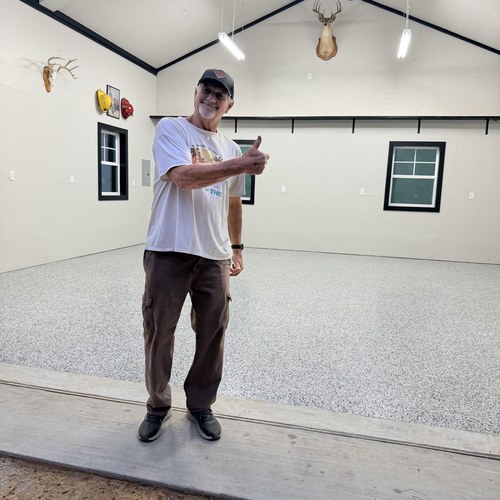
Questions to Ask Every Epoxy Flooring Contractor
Before any company gets close to your concrete, ask these specific questions and listen carefully to the answers:
1. What preparation method do you use, and what equipment?
Right answer: “We diamond grind with [specific machine — e.g., Husqvarna, Lavina, or similar professional equipment] to a CSP-2 or CSP-3 profile.” Red flag: “We acid etch,” “we clean and degrease,” or vague answers about “thorough prep.” Acid etching is inadequate for professional epoxy installation and produces failures. Any contractor who can’t name their grinding equipment doesn’t use professional-grade prep.
2. What epoxy system do you use, and is it one-part or two-part?
Right answer: Specific product name, “two-component” or “100% solids epoxy,” with a datasheet available. Red flag: “Premium epoxy,” “professional-grade” without specifics, or anything described as water-based. One-part water-based epoxy has tensile strength 6–8x lower than two-component systems and should not be used for residential or commercial installations.
3. Do you test for moisture before installation?
Right answer: “Yes, we perform a calcium chloride test or RH probe test on every slab before committing to a system.” Red flag: “We check visually,” or no mention of moisture testing at all. Moisture is the primary cause of epoxy delamination, and any contractor who doesn’t test for it before installation is gambling with your floor.
Red Flags That Predict a Failing Floor
| Red Flag | What It Signals |
|---|---|
| Quote significantly lower than all others | Inferior materials or skipped prep — not a bargain |
| Promises same-day installation for a complex system | Insufficient prep and inter-coat cure time |
| No written warranty with specific coverage terms | No intention to stand behind the work |
| No license or insurance when asked | No recourse if work is substandard or causes damage |
| Won’t provide references from past clients | No track record worth sharing |
| Pressure to sign same day or “lose the price” | High-pressure sales tactics covering quality gaps |
| Vague material descriptions (“commercial grade”) | Can’t or won’t document what they’re actually using |
How to Verify Contractor Quality
Beyond asking the right questions, there are several ways to verify that a contractor’s work holds up before you commit:
- Google reviews with photos: Look specifically for reviews mentioning how floors look 1–3+ years after installation. Recent reviews only tell you about first impressions.
- Ask to see a completed project in person: Any confident contractor will connect you with past clients willing to show their floors. Running your hand over the floor tells you about texture and film build in a way no photo can.
- Check for licensing and insurance: Texas requires contractor registration and carries requirements for bonded, licensed operators. Verify this before signing any contract.
- Ask for the product data sheet (TDS): A legitimate contractor using professional materials can produce the technical data sheet for their epoxy on request. It documents tensile strength, compressive strength, and chemical resistance.
Frequently Asked Questions
Why is CB1’s pricing higher than some competitors?
Industrial two-component epoxy costs significantly more than hardware store products. Professional diamond grinding equipment represents a major capital investment. A 15-year warranty requires a business that intends to be around to honor it. These costs are real, and the floor performance difference is real. CB1 will provide the technical data sheet for every product used on your project.
What should a good written warranty include?
A legitimate warranty specifies what’s covered (delamination, peeling, material failure), what’s not covered (normal wear, damage from misuse, acts of nature), the coverage period, and the remedy (repair, recoat, or credit). Vague “satisfaction guarantees” with no specific terms are not warranties.
How many quotes should I get for an epoxy floor project?
Three to four quotes is a reasonable sample for a major residential project. Rather than choosing purely on price, evaluate each contractor on their answers to the preparation and material questions above. The lowest quote is rarely the best value in epoxy flooring.
Is CB1 licensed and insured in Texas?
Yes. CB1 Specialty Concrete carries full general liability insurance and operates with all required Texas contractor registrations. Documentation is available upon request during the consultation.
Ready to transform your concrete? Get a free, no-pressure estimate from CB1 Specialty Concrete — San Antonio’s prep-first epoxy and polished-concrete experts, backed by a 15-year warranty.
REQUEST A FREE ESTIMATE
Free Estimate
Want this floor in your space?
We measure, inspect the slab, and give you a real number — no obligation.


