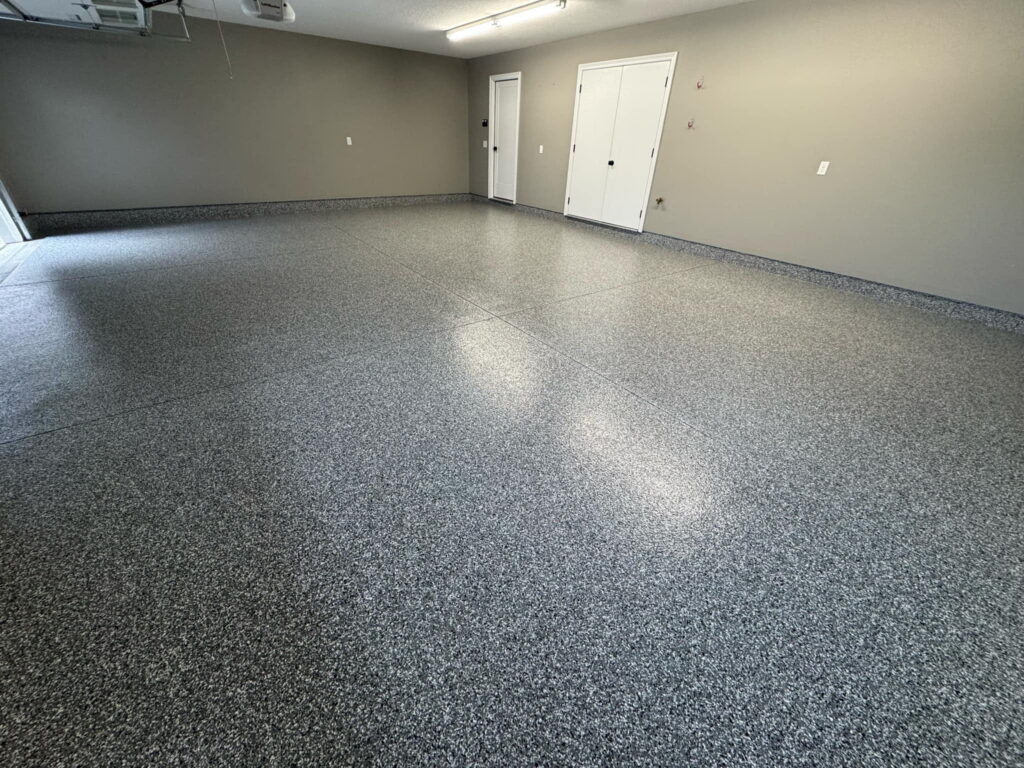
The marketing around epoxy flooring rightly emphasizes how easy it is to maintain — and for routine care, that’s genuinely true. A microfiber mop and pH-neutral cleaner handles 95% of what a residential garage or residential epoxy floor ever needs. But there are situations where DIY cleaning reaches its limit: accumulated residue that basic mopping can’t shift, stains that have been set for years, mechanical abrasion patterns from improper cleaning tools, or early signs of coating wear that need professional assessment. Homeowners in Helotes and across the San Antonio area who know the difference save time, money, and the risk of making things worse with the wrong approach.
DIY vs. Professional: When to Make the Call
| Situation | DIY Sufficient? | Professional Recommended? |
|---|---|---|
| Routine weekly cleaning | ✓ Yes — mop and neutral cleaner | No |
| Fresh oil or chemical spills | ✓ Yes — degrease and rinse promptly | No |
| Set-in oil stains (months old) | Try degreaser first | ✓ If DIY fails |
| Widespread soap residue / haze | ✓ Yes — rinse-only mopping x2–3 | No |
| Rubber tire marks | ✓ Usually — scrub brush + degreaser | ✓ If extensive or set-in |
| Surface scratching or micro-abrasion | No — maintenance topcoat needed | ✓ Yes — CB1 assessment |
| Bubbling or peeling areas | No — worsens with DIY intervention | ✓ Urgent — stop using and call |
| Large commercial floor (5,000+ sq ft) | Auto-scrubber needed | ✓ Professional service preferred |
| Annual deep clean (residential) | ✓ DIY with proper equipment | Optional — pro service available |
What Professional Epoxy Floor Cleaning Involves
When CB1 performs a professional maintenance service call, the process goes considerably further than household mopping. A professional assessment of the floor condition is performed first to identify any areas of concern — micro-delamination, surface abrasion, edge lifting — that should be noted or addressed before cleaning compounds the issue. Commercial auto-scrubber equipment with appropriate pad selection cleans the entire surface uniformly, reaching consistent pressure and cleaner concentration that mopping can’t replicate across a large area. Problem areas with set-in stains or contamination receive targeted treatment with appropriate chemistry. A post-clean inspection confirms the floor is fully clean and notes any areas where a maintenance coat should be scheduled.
The Maintenance Topcoat: The Most Important Professional Service
The professional service that has the most impact on the longevity and appearance of an epoxy floor isn’t cleaning — it’s a maintenance topcoat at the right interval. A maintenance topcoat involves light mechanical abrasion of the existing topcoat surface (to create adhesion profile), cleaning, and application of a fresh polyaspartic topcoat over the existing system. This is typically recommended at 10–15 years for residential floors and 7–12 years for commercial floors with heavy use. The cost is a fraction of full removal and reinstall, and it restores the floor to essentially new appearance and performance.
Signs You Need a Professional Assessment, Not Just Cleaning
Several floor conditions signal that professional assessment — not cleaning — is the right next step: bubbling or blistering anywhere on the floor surface; sections where the coating sounds hollow when tapped (indicating delamination below); lifting at floor edges or expansion joints; visible peeling in any area; or a widespread haze or color change that persists after thorough cleaning. These conditions indicate structural issues with the coating system that cleaning will not resolve and, in some cases, can worsen. Stop putting chemicals on a delaminating floor and call CB1 for an assessment.
Frequently Asked Questions
How much does a professional epoxy floor cleaning service cost in San Antonio?
A professional residential garage cleaning service typically runs $150–$350 depending on size, stain severity, and whether a condition assessment is included. Commercial cleaning services are quoted per square foot based on floor size and condition. Contact CB1 for a specific quote.
How often should a residential epoxy floor be professionally cleaned?
Most residential epoxy floors don’t require professional cleaning at all — routine homeowner maintenance is sufficient. Exceptions include very large floors where auto-scrubber equipment is warranted, floors with heavy vehicle traffic accumulating significant contamination, and floors approaching the maintenance topcoat interval where a condition assessment is valuable.
Can I rent an auto-scrubber to clean my large epoxy floor myself?
Yes — walk-behind auto-scrubbers are available at equipment rental centers. Use a soft (red or white) scrub pad, a dilute neutral pH cleaner, and keep forward speed consistent. This is a legitimate DIY option for large residential or small commercial floors. CB1 can advise on pad selection and cleaner concentration for your specific floor.
My epoxy floor has deep oil stains I can’t remove — what can CB1 do?
Very deep or long-standing oil contamination — particularly from vehicle oil drips that soaked in before the floor was cleaned — may have penetrated into the coating system rather than just sitting on the surface. In these cases, the contaminated section of topcoat can sometimes be mechanically removed and recoated. CB1 will assess the stain type and depth and recommend the most cost-effective repair approach.
Ready to transform your concrete? Get a free, no-pressure estimate from CB1 Specialty Concrete — San Antonio’s prep-first epoxy and polished-concrete experts, backed by a 15-year warranty.
REQUEST A FREE ESTIMATE
Free Estimate
Want this floor in your space?
We measure, inspect the slab, and give you a real number — no obligation.


