Basements are less common in the San Antonio and Austin area than in northern states, but the properties that have them often have the most untapped potential in the house. A raw concrete basement is utilitarian but uncomfortable — too cold, too dim, too unfinished to function as anything beyond storage. The right flooring transforms it into livable, purposeful space: a home gym, workshop, media room, office, or second living area. The challenge in Central Texas is that basement slabs frequently have moisture considerations that affect which flooring system is appropriate. Here’s how to think through the options.
Basement Flooring Options: A Complete Overview
| Option | Moisture Tolerance | Best Use | Cost/sq ft (installed) |
|---|---|---|---|
| Epoxy (with moisture barrier primer) | High (with vapor barrier) | General use, storage, workshops | $5 – $9 |
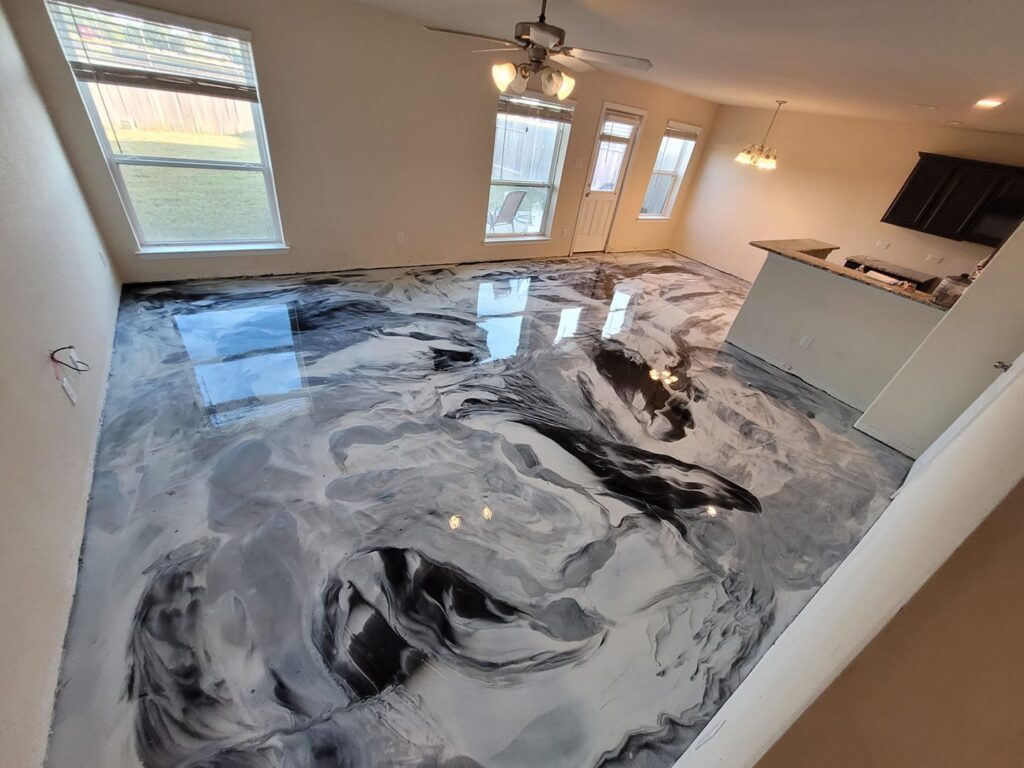
| Metallic epoxy (with moisture barrier) | High (with vapor barrier) | Luxury living, media rooms | $9 – $14 |
| Quartz broadcast epoxy | High (with vapor barrier) | Gyms, active spaces, utility | $6 – $10 |
| Polished concrete | Moderate (densifier helps; no film coating) | Living areas, offices (dry basements) | $4 – $7 |
| Concrete overlay + epoxy | High (moisture-tolerant overlay + barrier) | Damaged slabs needing resurfacing first | $8 – $14 |
| LVT / vinyl plank (over concrete) | Moderate (floating systems allow moisture) | Residential feel, bedroom areas | $4 – $8 |
| Carpet (over concrete) | Low — moisture creates mold risk | Not recommended in Texas basements | $3 – $7 |
The Moisture Question: Test Before You Commit
The single most important step before any basement flooring decision is moisture testing. Texas basements — particularly those in the Hill Country with limestone bedrock — experience variable soil moisture levels that drive water vapor through the slab from below. A calcium chloride test (ASTM F1869) or relative humidity probe test (ASTM F2170) measures the moisture vapor emission rate (MVER) and provides the data needed to specify the right system. High MVER doesn’t disqualify epoxy — it specifies a moisture vapor barrier primer as the first layer, which CB1 includes on all basement projects with elevated moisture readings. What it does disqualify is carpet (which traps moisture against the concrete and creates mold conditions) and standard hardwood (which buckles).
Zone-by-Zone Flooring Strategy for Finished Basements
A finished basement often serves multiple purposes in different zones, and different zones may benefit from different flooring approaches. A home gym area benefits from the impact resistance and cleanability of a quartz or flake epoxy system. A media room or lounge area might prefer the design quality of a metallic epoxy or polished concrete with warm-tone dye. A workshop zone needs solid color epoxy with a polyaspartic topcoat that resists tools, chemicals, and automotive fluids. A bathroom added to the basement needs a seamless quartz system with full cove base. CB1 can design a zone-specific flooring plan that uses the right system in each area of a finished basement.
Lighting and Color for Below-Grade Spaces
Basements have limited or no natural light — which makes floor color particularly important. Light-colored floors (cream, light gray, bone) dramatically improve perceived brightness in a below-grade space, bouncing artificial light back into the room and making the space feel significantly larger and more inviting than a dark floor would. This is one case where the color recommendation is consistent regardless of personal preference: lighter is better in a below-grade space, and the improvement in livability is immediately noticeable.
Frequently Asked Questions
Can I finish a Texas basement with epoxy without worrying about moisture?
With proper moisture testing and a moisture vapor barrier primer where indicated, yes — epoxy is an excellent basement floor finish in Texas. The barrier coat addresses the moisture concern proactively. What you can’t do is assume your slab is dry without testing — visual inspection isn’t reliable for moisture assessment, and applying a coating over an untested high-MVER slab is the primary cause of basement epoxy failures.
What’s the best flooring for a basement home gym in Austin?
A quartz broadcast or full-flake epoxy system with a polyaspartic topcoat, in a light to medium color. The quartz or flake provides excellent traction and impact resistance for weights and equipment. The light color brightens the below-grade space significantly. The seamless, easy-to-clean surface handles sweat, chalk, and supplement spills. For heavy free weight areas, CB1 recommends rubber equipment mats under platforms and weight racks.
How long does basement epoxy installation take?
A typical 800–1,200 sq ft basement takes 3–4 days: Day 1 for moisture testing, grinding, and primer; Day 2 for base coat and broadcast; Day 3 for topcoat. The basement should be accessible for ventilation throughout and avoided for the 24-hour cure period after the final coat. CB1 coordinates the ventilation requirements as part of the installation setup.
Is polished concrete a viable option for a Texas basement?
For confirmed dry slabs with low MVER, yes — polished concrete produces a beautiful, durable basement floor with minimal maintenance. The densifier penetrates the concrete and helps manage moisture vapor at low levels. For higher-MVER slabs, an epoxy system with a vapor barrier primer is more appropriate because the barrier coat specifically addresses moisture drive that a densifier alone can’t fully manage.
Ready to transform your concrete? Get a free, no-pressure estimate from CB1 Specialty Concrete — San Antonio’s prep-first epoxy and polished-concrete experts, backed by a 15-year warranty.
REQUEST A FREE ESTIMATE
Free Estimate
Want this floor in your space?
We measure, inspect the slab, and give you a real number — no obligation.


