You’re considering upgrading your concrete floor. Two excellent options stand out: epoxy flooring and polished concrete.
Both transform dull concrete into beautiful, durable surfaces. Both are professional upgrades that increase property value.
But they’re different systems with different benefits and drawbacks.
This comprehensive comparison will help you choose the right option for your specific situation.
WHAT IS EPOXY FLOORING?
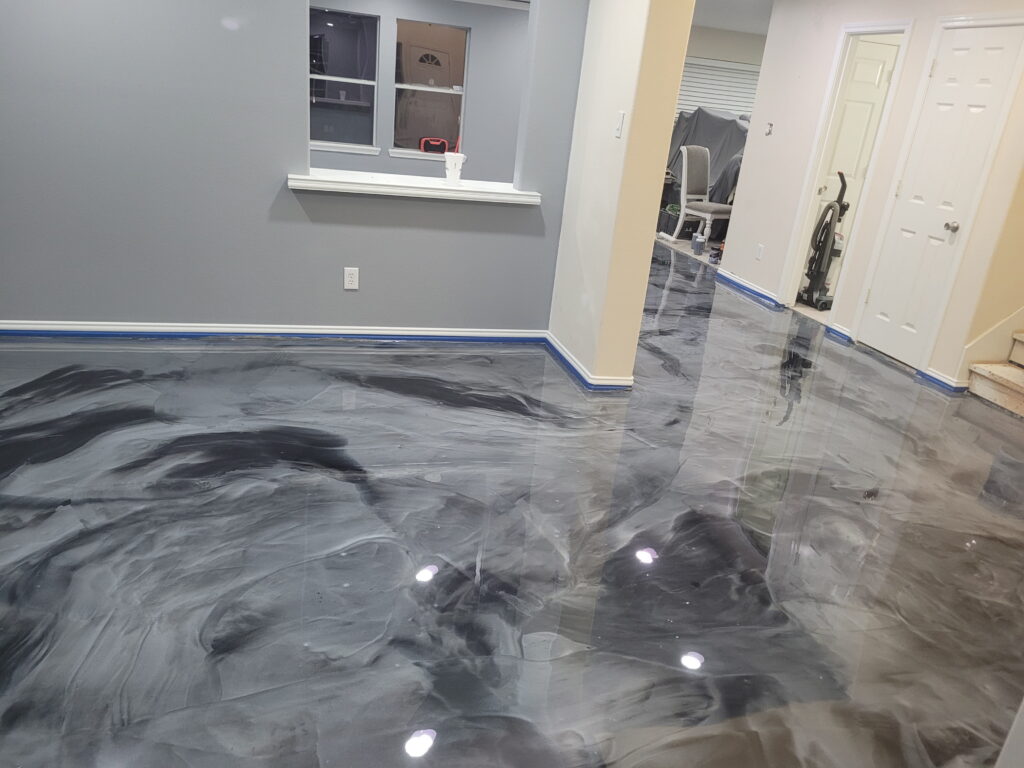
Epoxy is a coating system that bonds chemically to concrete, creating a hard protective layer.
How It Works
- Two-component epoxy mixed and applied to concrete
- Chemically bonds to surface
- Cures into protective coating
- Creates seamless, glossy surface
Appearance
- High-gloss or matte finish
- 50+ color options
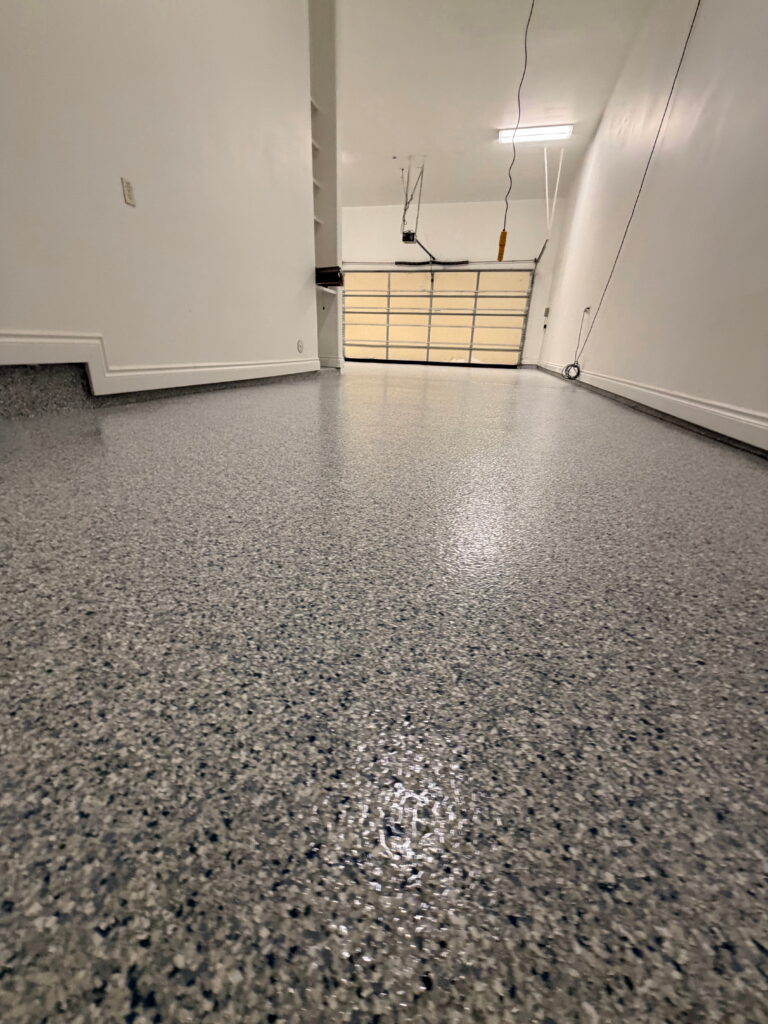
- Can include metallic effects or speckles
- Completely customizable
Durability
- 10-15+ years with proper care
- Resists stains, chemicals, impact
- Requires minimal maintenance
WHAT IS POLISHED CONCRETE?
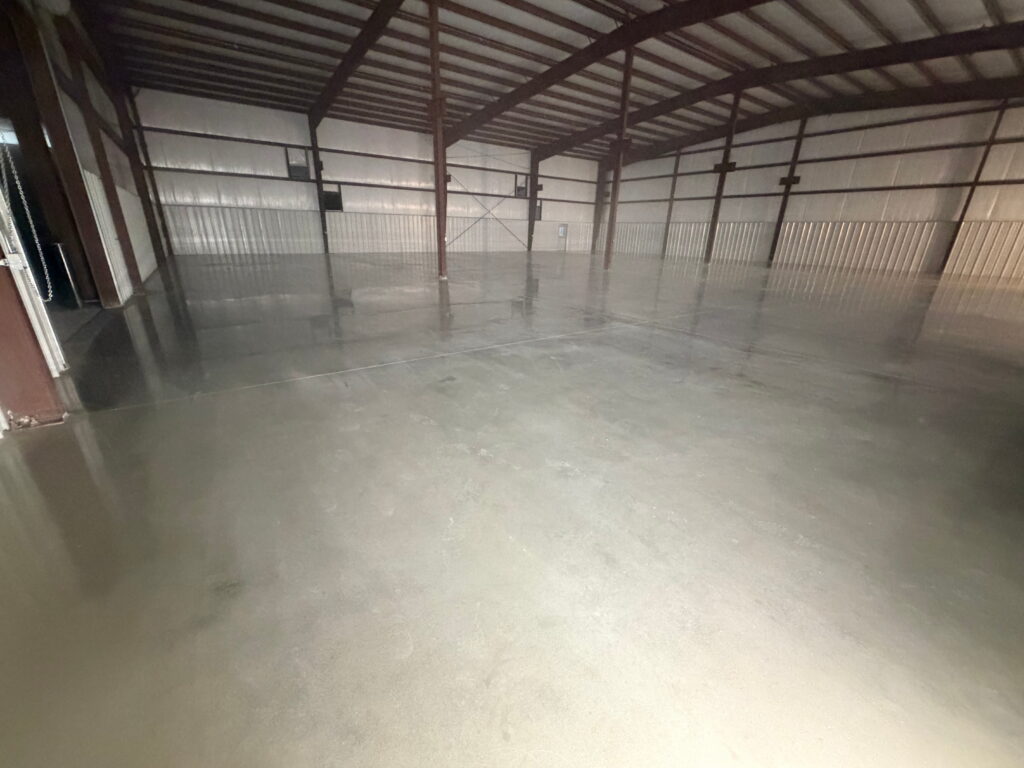
Polished concrete involves grinding and polishing existing concrete to a smooth, glossy finish.
How It Works
- Multiple grinding passes with progressively finer grits
- Exposes aggregate in concrete
- Polishing creates smooth, reflective surface
- Optional sealing for protection
Appearance
- High-gloss to matte finish
- Natural concrete colors/patterns
- Modern, industrial-chic aesthetic
- Cannot customize color (limited to natural tones)
Durability
- 10-15+ years with proper care
- Less stain-resistant than epoxy
- Requires professional maintenance
DETAILED COMPARISON
Cost
Epoxy: $2,500-$8,000 for residential Polished: $1,500-$5,000 for residential
Winner: Polished (lower upfront cost)
But: Epoxy’s superior stain resistance may reduce long-term costs in stain-prone areas.
Customization
Epoxy: 50+ colors, metallic effects, speckled finishes, custom designs Polished: Limited to natural concrete colors, patterns based on aggregate
Winner: Epoxy (far more customization options)
Stain Resistance
Epoxy: Excellent (oil, wine, chemicals wipe clean) Polished: Moderate (stains can penetrate in certain situations)
Winner: Epoxy (superior stain protection)
Slip Resistance
Epoxy: Can be slippery (anti-slip additives available) Polished: Naturally slip-resistant due to texture
Winner: Polished (naturally safer without additives)
Maintenance
Epoxy: Sweep, mop with pH-neutral cleaner Polished: Same basic maintenance, but may show water spots
Winner: Epoxy (slightly easier maintenance)
Sustainability
Epoxy: Uses coating materials (not purely eco-friendly) Polished: No coating, uses only existing concrete (fully eco-friendly)
Winner: Polished (more sustainable choice)
Aesthetic
Epoxy: Modern, intentional, designed appearance Polished: Industrial-chic, natural aggregate patterns
Winner: Depends on preference
Durability
Epoxy: 10-15 years, resistant to most damage Polished: 10-15 years, more prone to re-staining without sealer
Winner: Epoxy (more damage-resistant)
Best Applications
Epoxy Best For:
- Garages (oil stain resistance)
- Kitchens (stain resistance, easy clean)
- Basements (finished look)
- Commercial spaces (professional appearance)
- Spaces where color matters
Polished Best For:
- Modern homes (industrial aesthetic)
- Eco-conscious homeowners
- Retail spaces (contemporary look)
- Galleries and studios (neutral backdrop)
- Budget-conscious projects
SCENARIO DECISION GUIDE
Choose Epoxy If: ✓ You want color customization ✓ Stain resistance is important ✓ You want a designed, intentional look ✓ You prefer high-gloss finish ✓ You want professional appearance ✓ You have pets or kids (easier cleaning) ✓ You’re in a commercial space
Choose Polished Concrete If: ✓ You want the most eco-friendly option ✓ Industrial-modern aesthetic appeals to you ✓ Budget is the primary concern ✓ You prefer natural look ✓ You’re design-focused and want contemporary style ✓ You want naturally slip-resistant surface ✓ You’re unconcerned about stains
INSTALLATION COMPARISON
Epoxy Installation
- Surface preparation (critical step)
- Epoxy application (2-3 coats)
- Timeline: 2-3 days
- Your space unavailable during installation
- Curing: 24-48 hours before use
Polished Concrete Installation
- Grinding and polishing (multiple passes)
- Timeline: 2-4 days (larger spaces take longer)
- Your space unavailable during work
- Curing: Minimal (can use immediately after)
MAINTENANCE COMPARISON
Epoxy Maintenance
- Weekly: Sweep, light mop
- Monthly: Deep clean with pH-neutral cleaner
- Annual: Professional cleaning (recommended)
- Lifespan: 10-15 years with proper care
Polished Concrete Maintenance
- Weekly: Sweep, light mop
- Monthly: Mop with appropriate cleaner
- Annual: Professional maintenance
- May develop water spots over time
- Lifespan: 10-15 years with proper care
COMPARING REAL WORLD EXAMPLES
Example 1: Homeowner’s Garage
Epoxy Choice:
- Cost: $4,000
- Benefit: Oil stains wipe clean, looks professional
- Maintenance: Basic (sweep, mop)
- Result: Showroom-quality garage
Polished Choice:
- Cost: $2,500
- Benefit: Industrial-modern look, eco-friendly
- Maintenance: Basic, but oil stains require attention
- Result: Contemporary industrial-chic garage
Better Choice: Epoxy (stain resistance, showroom look)
Example 2: Modern Home with Eco-Conscious Owner
Epoxy Choice:
- Cost: $5,000
- Benefit: Customized to match design
- Drawback: Coating materials not eco-friendly
- Result: Beautiful designed surface
Polished Choice:
- Cost: $3,000
- Benefit: Eco-friendly, modern aesthetic
- Drawback: No color customization
- Result: Sustainable modern floor
Better Choice: Polished (aligns with eco values, saves cost)
Example 3: Commercial Kitchen
Epoxy Choice:
- Cost: $4,500
- Benefit: Seamless, stain-resistant, professional
- Advantage: Oil and food spills contain and clean easily
- Result: Food-safe, professional kitchen
Polished Choice:
- Cost: $2,800
- Benefit: Contemporary look, lower cost
- Drawback: Less resistant to food stains
- Result: Nice look, but stain concerns
Better Choice: Epoxy (food safety and stain resistance critical)
FAQ: EPOXY vs POLISHED
Q: Can I polished concrete then apply epoxy?
A: Yes. Polished concrete can be an alternative to epoxy, or you could theoretically polish then seal. However, once polished, applying epoxy would cover the polish aesthetic.
Q: Can I switch from one to the other later?
A: Yes. Epoxy can be removed and polished concrete applied, or vice versa. However, switching is expensive and time-consuming. Choose wisely upfront.
Q: Which is better for resale value?
A: Both increase home value. Epoxy offers more versatility. Polished appeals to modern buyers. Both signal quality maintenance.
Q: Which requires less maintenance?
A: Epoxy (superior stain resistance reduces cleaning complexity).
Q: Can I get the industrial look with epoxy?
A: Yes. Concrete epoxy can be designed to look industrial-modern. Polished is naturally industrial.
Q: Is polished concrete slippery?
A: No. Polished concrete is naturally slip-resistant.
Both epoxy flooring and polished concrete are excellent options. Your choice depends on priorities:
Choose epoxy for: Customization, stain resistance, professional appearance, commercial applications
Choose polished concrete for: Budget consciousness, eco-friendly preference, industrial aesthetic, contemporary design
Both systems deliver beautiful, durable floors that last 10+ years. You truly can’t go wrong with either choice. Your decision should be based on your specific situation, aesthetic preference, and priorities.
Still not sure which option is right for you?
We’ll assess your space, understand your needs, and recommend the best option for your situation. We can do both epoxy and polished concrete, so our recommendation is based on what’s best for you, not what we prefer to sell.
CALL 210-753-8986
Free Estimate
Want this floor in your space?
We measure, inspect the slab, and give you a real number — no obligation.


