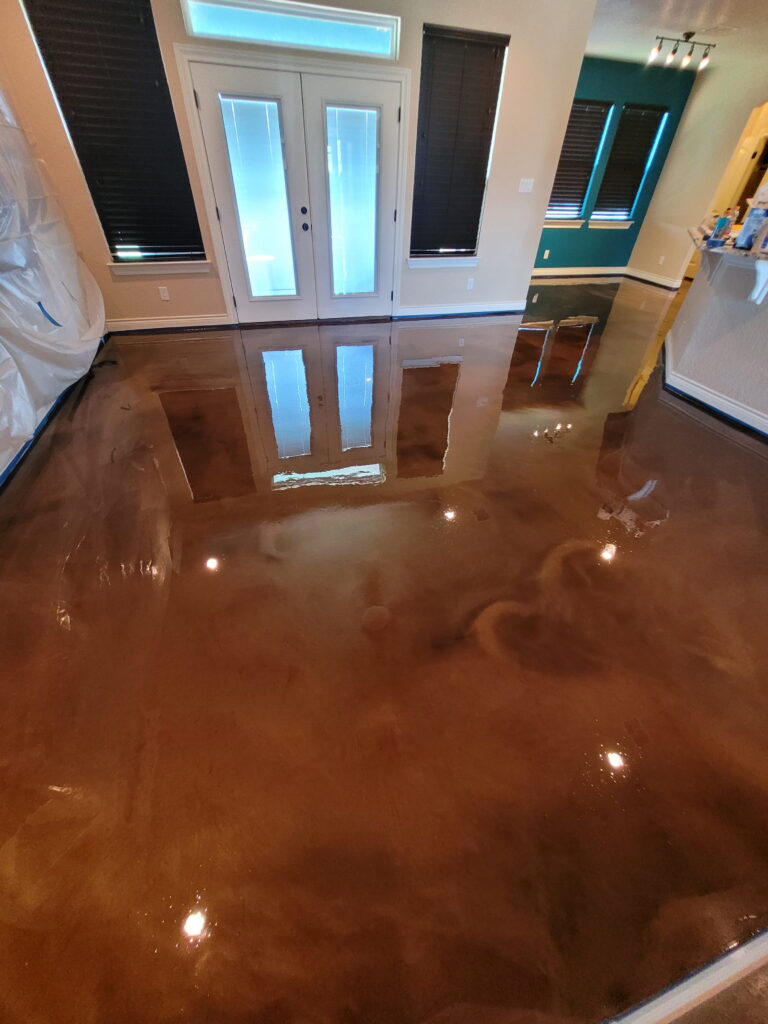
Cleaning an epoxy floor is genuinely simple once you understand what the surface is and what it responds well to. The polyaspartic or urethane topcoat on a quality epoxy floor is a fully cross-linked polymer film — dense, non-porous, and chemically stable. Most household dirt, oil, and spills sit on top of it rather than penetrating it, which is why epoxy floors clean so much faster than tile, grout, or concrete. The key to keeping it looking perfect is using the right products (a short list) and avoiding the wrong ones (also a short but important list).
Safe Products vs. Products to Avoid
| Product / Chemical | Safe for Epoxy? | Notes |
|---|---|---|
| Warm water only | ✓ Always safe | Handles most routine cleaning |
| Simple Green (diluted 1:30) | ✓ Safe | Best general-purpose epoxy cleaner |
| Zep Neutral Floor Cleaner | ✓ Safe | Professional grade, widely available |
| Dawn dish soap (diluted) | ✓ Safe (low residue risk) | Use sparingly; rinse well to prevent film |
| Bleach (diluted ≤1:50) | ⚠ Use carefully | Occasional disinfection ok; avoid routine use |
| Vinegar or citrus cleaners | ✗ Avoid | Acidic — dulls polyaspartic topcoat over time |
| Bleach (concentrated) | ✗ Avoid | Discolors and softens topcoat |
| Pine-Sol / ammonia-based cleaners | ✗ Avoid | Can dull or cloud the finish |
| Acetone / nail polish remover | ✗ Never | Dissolves the topcoat film |
| Muriatic acid / acidic concrete cleaner | ✗ Never | Etches and destroys topcoat on contact |
Tools That Work — and Tools That Damage
Recommended tools: Microfiber dust mop (best for daily maintenance — captures fine grit rather than pushing it), microfiber flat mop with a wringer bucket (wet cleaning), soft nylon scrub brush (spot cleaning), auto-scrubber with soft pad (for large commercial areas or heavy cleaning). Avoid: Scotch-Brite abrasive pads (scratch the topcoat surface), steel wool, stiff-bristle wire brushes, and high-pressure steam mops (which force moisture into the topcoat).
Specific Stain Removal Guide
Motor oil and grease: Absorb fresh spills with kitty litter or sawdust, then sweep. Clean residue with Simple Green at 1:10 dilution and a scrub brush; rinse with water. For set-in stains, a commercial degreaser like Purple Power (diluted) followed by rinsing works well.
Rust stains: Apply a commercial rust remover labeled safe for sealed surfaces (Iron Out or similar), wait 5 minutes, scrub gently, rinse thoroughly. Do not use muriatic acid — it will damage the topcoat far more than the rust it removes.
Paint drips: Fresh paint scrapes off with a plastic scraper without damage. Dried latex paint can be softened with a small amount of denatured alcohol on a cloth, then scraped carefully. Oil-based paint and epoxy paint require professional assessment.
Fertilizer or pool chemical stains: Rinse immediately with water — the longer these chemicals sit, the more likely they are to affect the topcoat. Dilute bleach solution cleans the residue; rinse thoroughly after.
The Boerne Homeowner’s Reality
Homeowners in Boerne and the Hill Country track in more caliche, limestone dust, and mineral-heavy dirt than those in urban neighborhoods. This fine particulate is mildly abrasive when ground underfoot, so the most important maintenance habit in this area is frequent dust mopping — keeping grit off the surface before foot traffic can grind it across the topcoat. An entrance mat that captures Hill Country soil at the door is genuinely worth having.
Frequently Asked Questions
Can I use a pressure washer to clean my epoxy garage floor?
A garden hose rinse or light-pressure washer is fine. High-pressure concentrated spray — over 1,500 PSI at close range, kept on one spot — can eventually erode the topcoat surface over many cleaning cycles. Use a wide-fan nozzle, keep it moving, and stay at least 12 inches from the surface.
How do I clean an epoxy floor that has soap residue buildup?
Soap residue from cleaners that weren’t properly rinsed creates a dull, streaky film that looks like the floor has degraded. Mop with clean warm water only (no cleaner) two or three times, rinsing the mop thoroughly between passes. This removes the residue and usually restores the floor’s appearance immediately.
What’s the fastest way to clean a large epoxy floor?
For large residential or commercial epoxy floors, a walk-behind auto-scrubber with a soft red or white cleaning pad and dilute neutral cleaner cleans and rinses in a single pass. CB1 can recommend rental sources for residential customers who need to periodically deep-clean a large space.
My cleaning products say “safe for sealed surfaces” — is that the same as safe for epoxy?
Not necessarily. “Sealed surface” products are designed for penetrating concrete sealers, which are chemically different from a cross-linked polyaspartic topcoat. Check the pH of the product (aim for 6–9) and verify it doesn’t contain acetone, citrus solvents, or bleach at high concentration. When in doubt, Simple Green diluted is always a safe default.
Ready to transform your concrete? Get a free, no-pressure estimate from CB1 Specialty Concrete — San Antonio’s prep-first epoxy and polished-concrete experts, backed by a 15-year warranty.
REQUEST A FREE ESTIMATE
Free Estimate
Want this floor in your space?
We measure, inspect the slab, and give you a real number — no obligation.


