
Epoxy floor maintenance is genuinely simple — but “simple” doesn’t mean “anything goes.” There’s a right sequence, the right products, and a few specific things that will damage your floor if you use them. Homeowners in Schertz and across the San Antonio area who follow this step-by-step guide consistently report that their floors look better at year five than they expected. The technique is straightforward once you know it. Here’s exactly how to do it.
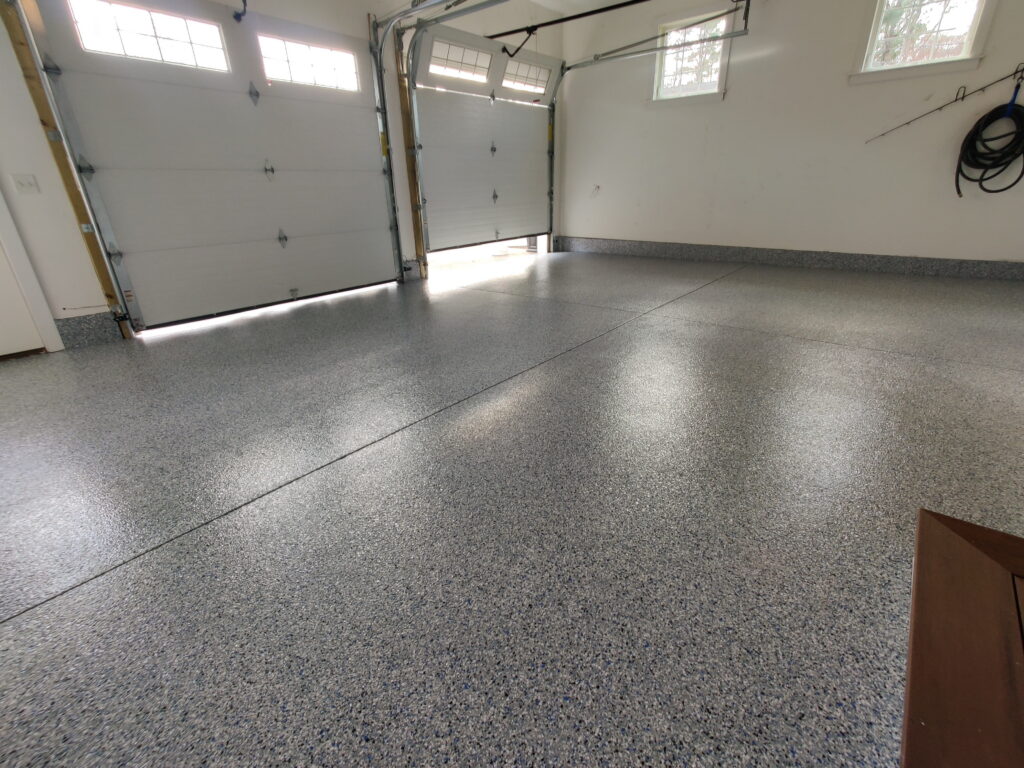
Step 1: The Daily or After-Use Sweep (2–3 minutes)
The single most protective thing you do for your epoxy floor happens before any cleaning product touches it. Fine grit — caliche dust, sand, gravel tracked in from driveways — is mildly abrasive. When ground underfoot or under vehicle tires, it micro-scratches the polyaspartic topcoat surface over time, dulling the finish. Eliminating this grit before it accumulates is the highest-leverage maintenance action you can take. How to do it: Use a microfiber dust mop (preferred) or a soft-bristle broom. Make parallel passes across the floor in one direction. For a two-car garage, this takes 2–3 minutes. Do this after any use that tracks in outdoor debris — after parking, after yard work, after any event. Don’t skip this step and try to compensate by mopping more frequently. Wet mopping doesn’t remove grit; it moves it around.
Step 2: Weekly Damp Mop (8–10 minutes)
Once weekly (or as needed for spills and marks), a full damp mop removes the residue that dust mopping leaves behind — tire oils, footprint films, cleaning product residue from previous weeks. What you need: A microfiber flat mop with a wringer or a spray mop system. A cleaning solution of Simple Green at 1:30 dilution in warm water (one capful per gallon), or plain warm water for light cleaning. How to do it: Wring the mop until it’s damp, not wet — you should not be leaving standing water. Mop in 4-foot sections, working from the back of the space toward the exit. Rinse and wring the mop head after every 4–5 passes. Allow the floor to dry before walking on it (3–5 minutes in San Antonio’s dry heat). Key mistake to avoid: Leaving cleaning solution to air-dry on the floor without rinsing. This leaves a residue film that builds up over time and makes the floor look cloudy. If you used any cleaning product, follow with a final pass of the damp mop using clean water only.
Step 3: Spot Cleaning (As Needed, 1–2 minutes)
Fresh spills are the easiest cleaning task on an epoxy floor — the non-porous surface prevents penetration, so nearly everything wipes up immediately. For fresh spills: Absorb liquid with a clean rag or paper towel, then wipe the area with a damp cloth. No cleaning product needed for most fresh spills. For oil and grease: Apply a small amount of Simple Green or dish soap directly to the area. Let it sit 2 minutes. Scrub with a soft nylon brush in circular motion. Rinse with clean water and dry. For tire marks: Spray dilute Simple Green on the mark. Let sit 1 minute. Scrub with soft nylon brush. Rinse. Most tire marks on a polyaspartic topcoat are surface deposits that come off with this treatment.
Step 4: Monthly Deep Clean (20–25 minutes)
Once a month, a more thorough clean addresses any accumulated residue, edge buildup, and areas that regular mopping misses. How to do it: Mix Simple Green at 1:20 dilution (slightly stronger than the weekly solution). Apply to the entire floor surface using the mop. Allow to dwell 3–5 minutes (don’t let it dry). Scrub the entire floor with a soft nylon brush or a mop with a scrubbing attachment — work in sections. Mop up the cleaning solution. Rinse the entire floor with clean water twice (mop passes with clean water, rinsing the mop head between passes). Allow to fully dry. Pay extra attention to: Floor edges and corners where debris accumulates; the area immediately in front of vehicle parking positions (highest grease and tire residue accumulation); and any drains or low spots where water pools.
Annual Inspection Checklist
Once a year, spend 15 minutes doing a systematic inspection of the floor. Walk the entire surface and tap-test suspicious areas (a hollow sound indicates potential delamination beneath). Look for any peeling, bubbling, or lifting edges. Check for surface dulling patterns (often concentrated in traffic lanes or parking spots). Note any areas with staining that routine cleaning hasn’t addressed. If everything looks good: Continue the routine and note the floor’s age for future maintenance topcoat planning. If you see any concerning signs: Contact CB1 for a free assessment. Early intervention on developing issues is almost always less expensive than waiting.
Frequently Asked Questions
Can I use a Roomba or robot mop on my epoxy floor?
Yes — robot vacuums with soft brush rolls work well for daily dust removal. Robot mops work for light cleaning but may leave residue if they use cleaning solution that isn’t rinsed. Check the solution pH (avoid acidic cleaners in the robot’s reservoir) and rinse with a manual damp mop occasionally to prevent film buildup.
How do I remove a stain that didn’t come out with regular cleaning?
For stubborn stains, try a longer dwell time with the cleaning solution (5–10 minutes) and a slightly firmer scrubbing action with a soft nylon brush. For rust stains specifically, a commercial rust remover safe for sealed surfaces (Iron Out or similar) works well — follow with thorough rinsing. Contact CB1 if any stain persists — we can advise on targeted treatments that won’t harm the topcoat.
My floor is starting to look dull in the parking area — is that a problem?
Gradual dulling in the vehicle parking area is normal topcoat wear from tire contact and cleaning friction over years of use. It’s the topcoat doing its job of sacrificing itself to protect the underlying epoxy. At 10–15 years, a maintenance topcoat restores the entire floor’s sheen. If the dulling is appearing within the first 3–5 years, it may indicate the original topcoat was thinner than specified — worth a CB1 assessment.
Is there anything I should do differently for a quartz vs. smooth epoxy floor?
The routine is the same. Quartz aggregate floors may require slightly more scrubbing during the monthly deep clean to bring out debris that settles in the texture profile. A stiff-bristle nylon brush (not wire) works well for quartz cleaning. The daily dust mopping step is even more important for quartz surfaces because fine debris can accumulate in the texture if not removed regularly.
Ready to transform your concrete? Get a free, no-pressure estimate from CB1 Specialty Concrete — San Antonio’s prep-first epoxy and polished-concrete experts, backed by a 15-year warranty.
REQUEST A FREE ESTIMATE
Free Estimate
Want this floor in your space?
We measure, inspect the slab, and give you a real number — no obligation.


