When homeowners and commercial operators in Schertz, Cibolo, and across the San Antonio area compare “quartz flooring” and “epoxy flooring,” they’re often unaware that quartz flooring IS an epoxy system — it’s an epoxy base coat with a broadcast layer of colored quartz aggregate embedded in it, finished with a clear topcoat. The comparison is really between a smooth solid-color epoxy system and a quartz-broadcast epoxy system: two members of the same family, optimized for different environments and priorities. Understanding the differences helps you choose the right system for your specific space.
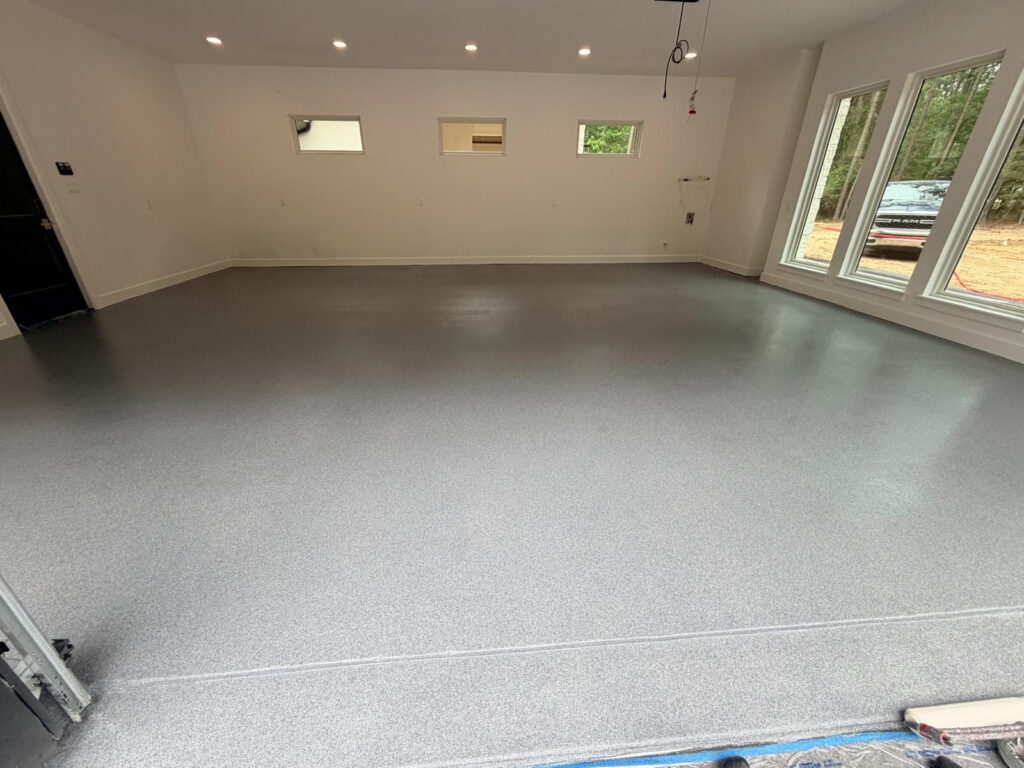
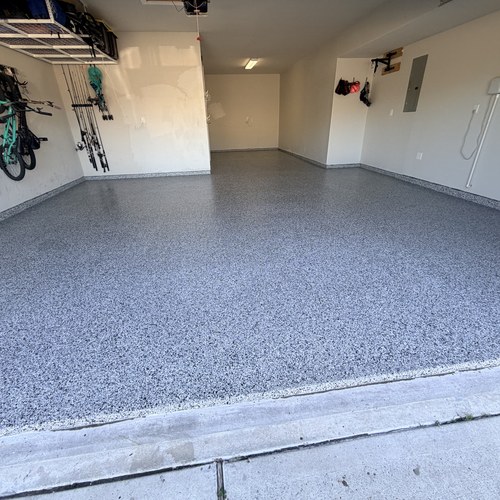
Full Comparison: Quartz Broadcast vs. Standard Smooth Epoxy
| Factor | Standard Smooth Epoxy | Quartz Broadcast Epoxy |
|---|---|---|
| Slip resistance (dry) | Good | Excellent |
| Slip resistance (wet / greasy) | Moderate — can be slippery | Excellent — aggregate provides traction |
| Aesthetics | High gloss, solid color, commercial look | Textured, varied color blends, natural aggregate look |
| Cleaning ease | Very easy (smooth surface) | Easy (slightly more scrubbing for texture) |
| Chemical resistance | Excellent | Excellent |
| Impact resistance | Good | Excellent (aggregate adds hardness) |
| UV stability (with poly topcoat) | Excellent | Excellent |
| Cost per sq ft | $3.50 – $6 | $5 – $9 |
| Best use | Garages, warehouses, light commercial | Kitchens, bathrooms, commercial kitchens, pools |
| Lifespan | 15 – 20 years | 15 – 20+ years |
The Slip Resistance Difference — Why It Matters
The most functionally significant difference between smooth epoxy and quartz is wet slip resistance. A smooth, high-gloss epoxy surface — while beautiful — has a relatively low wet coefficient of friction. In dry conditions, this isn’t a safety concern; in wet conditions (kitchen spills, pool surrounds, bathroom floors, rain-wet patios), it can be. Quartz aggregate embedded in the surface creates a textured profile with a wet COF of 0.70–0.90, well above the ADA minimum of 0.60 and appropriate for wet-environment floors. For this reason, CB1 recommends quartz systems for any floor that will regularly get wet.
Aesthetic Comparison
Smooth solid-color epoxy has a clean, industrial look that reads as professional and functional — it’s the dominant choice for garages, warehouses, and commercial utility spaces where the floor’s job is performance. Quartz systems have a warmer, more natural look that resembles terrazzo or stone aggregate — appropriate for residential kitchens, living areas, and commercial spaces where the aesthetic needs to be inviting rather than industrial. Both are available in a wide range of colors; quartz systems typically offer blended multi-color aggregates that add visual depth beyond what a solid color epoxy can achieve.
Maintenance: Slightly Different Demands
Both systems share the same basic maintenance protocol: dust mop, damp mop with neutral pH cleaner, spot clean as needed. The textured surface of a quartz system requires slightly more scrubbing effort to remove accumulated debris in the aggregate surface than a smooth epoxy — a soft nylon brush brings up any embedded grit more effectively than mopping alone. The maintenance difference is modest, but worth noting for spaces where minimum cleaning effort is a priority.
Frequently Asked Questions
Can quartz flooring be installed in a garage?
Yes, absolutely. Quartz systems are fully appropriate for residential and commercial garages. The enhanced slip resistance is a bonus in a garage environment where oil or water spills occur. The textured surface hides minor dirt and tire scuffs more effectively than a high-gloss smooth system. The modest additional cost over smooth epoxy is often worthwhile in garages used as working spaces or workshops.
Is quartz epoxy harder to clean than smooth epoxy?
Slightly — the aggregate texture can accumulate fine grit in the low points of the surface more than a smooth surface does. Regular sweeping or dust mopping prevents this from becoming a cleaning challenge. A weekly mop with neutral cleaner and occasional scrub-brush pass keeps a quartz floor looking excellent with minimal effort.
Does quartz flooring cost significantly more than standard epoxy?
Quartz systems typically cost $1.50–$3 more per square foot than a comparable smooth epoxy system. For a two-car garage, this represents $600–$1,200 in additional cost — a meaningful premium, but one that buys meaningfully better slip resistance, visual depth, and slightly higher impact resistance. Whether it’s worth it depends on the use case.
What colors and aggregate blends are available in quartz systems?
CB1 offers a wide range of quartz aggregate blends from neutral earth tones (sandstone, limestone, granite grays) to vibrant multi-color options. The aggregate is seen through a clear epoxy matrix, so the finished color is a combination of the aggregate color and the base coat color beneath it. CB1 brings sample boards to every consultation so you can evaluate options in your actual space and lighting conditions.
Ready to transform your concrete? Get a free, no-pressure estimate from CB1 Specialty Concrete — San Antonio’s prep-first epoxy and polished-concrete experts, backed by a 15-year warranty.
REQUEST A FREE ESTIMATE
Free Estimate
Want this floor in your space?
We measure, inspect the slab, and give you a real number — no obligation.


