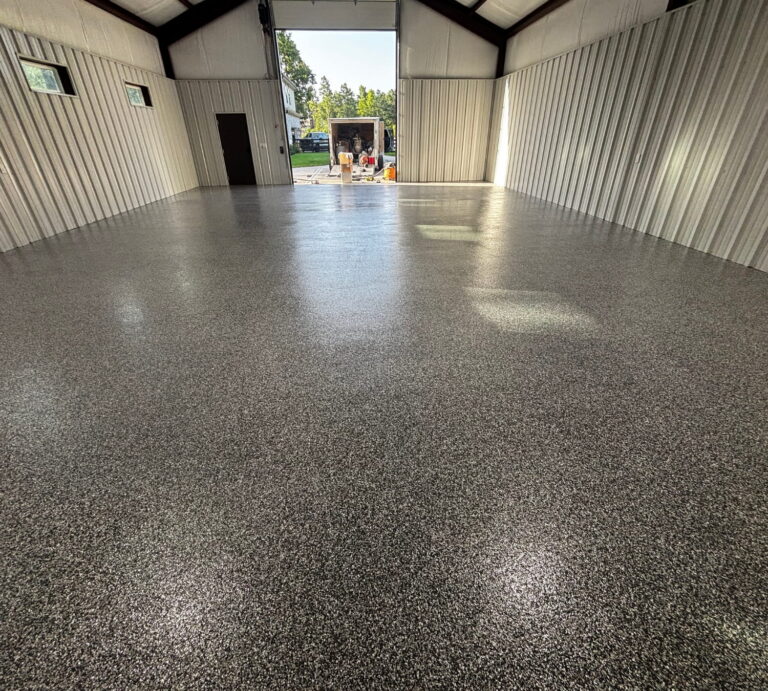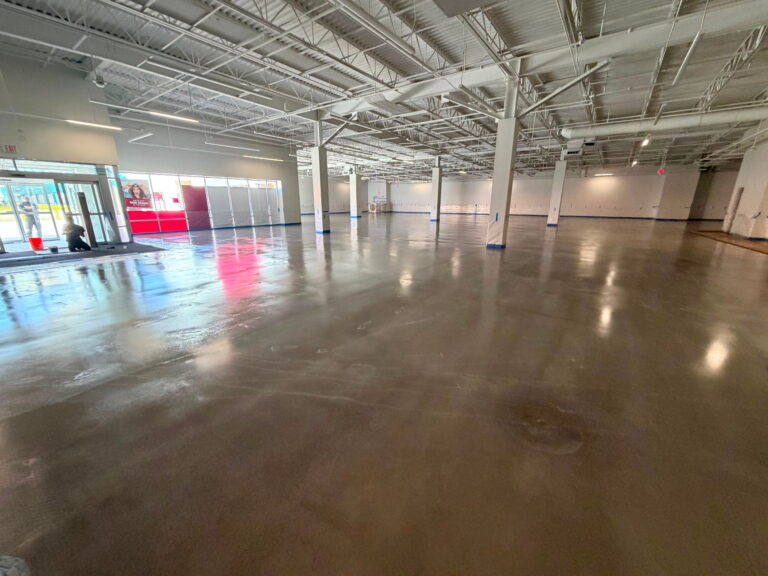
Walk through any modern retail development in Austin or the Pearl District in San Antonio and you’ll notice the floors: that clean, reflective, industrial-chic surface that reads as sophisticated without screaming expensive. It’s polished concrete, and it’s become the default flooring choice for retail, boutique hospitality, and creative office spaces across the Texas market — for very good practical reasons.
What Is Polished Concrete?
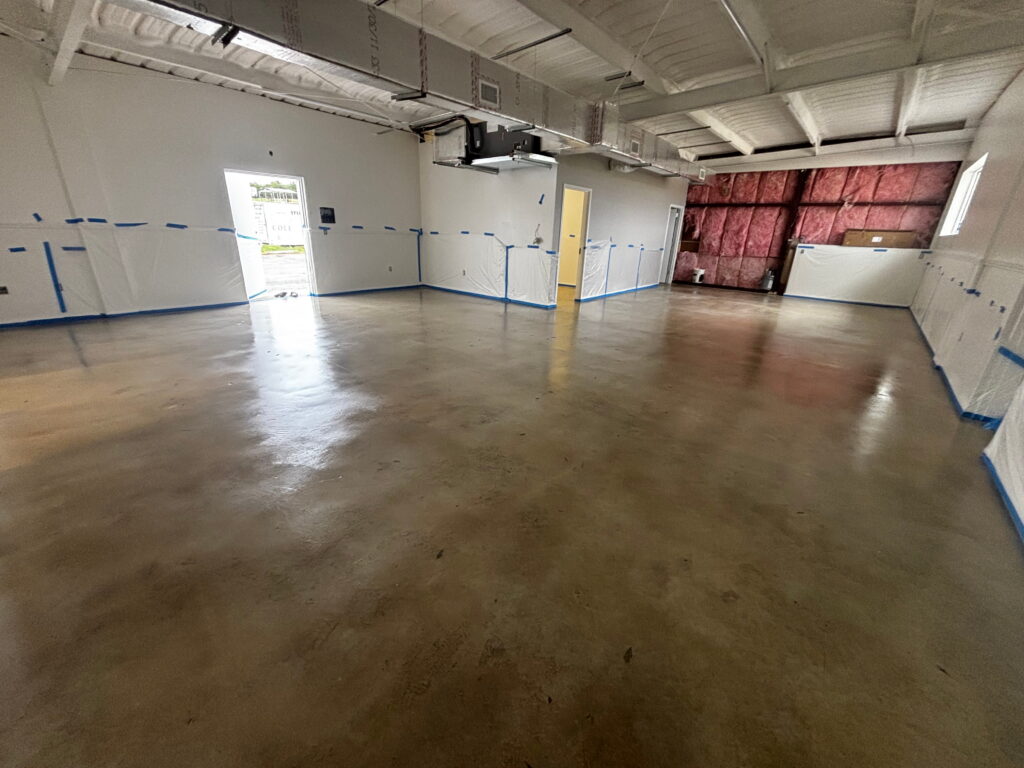
Polished concrete is the process of mechanically grinding and honing an existing concrete slab through progressive grits — from coarse diamond tooling to fine resin-bond polishing pads — to achieve a dense, light-reflective surface. No coating is applied. The concrete itself becomes the finished floor, densified with a penetrating chemical hardener and polished to the desired level of sheen (from a low-sheen industrial look to a high-gloss mirror finish). The result is a floor that’s integral to the slab — it can’t peel or delaminate.
Why Retail Operators Choose Polished Concrete
Retailers have learned through decades of experience that flooring is one of the highest ongoing operating costs in a commercial space — not in installation, but in maintenance. Vinyl composition tile requires regular stripping and waxing. Tile grout harbors bacteria and stains, requiring professional cleaning. Carpet is replaced every 5–10 years. Polished concrete requires none of this: a dust mop and an occasional auto-scrubber pass is all the maintenance needed to keep the floor looking excellent for decades.
| Flooring Type | Install Cost/sq ft | Annual Maintenance/sq ft | Lifespan |
|---|---|---|---|
| VCT (strip and wax program) | $2 – $4 | $1.50 – $3.00 | 10 – 15 years |
| Ceramic tile | $5 – $10 | $0.50 – $1.50 | 20 – 30 years |
| Polished concrete | $3 – $7 | $0.05 – $0.25 | Indefinite |
| Epoxy coating | $4 – $9 | $0.10 – $0.30 | 15 – 20 years |
Aesthetics: Why Retailers in Austin Love It
Austin’s retail and hospitality culture prizes authenticity and rawness alongside design sophistication. Polished concrete delivers exactly that: a surface that feels genuinely industrial without being cold, that photographs beautifully in natural light, and that serves as a neutral backdrop for any merchandise or interior concept. It also signals sustainability — no synthetic coatings, no VOC-heavy sealers, no disposable materials. In an Austin market where eco-conscious branding matters to consumers, the story of polished concrete aligns with brand values.
Performance in High-Traffic Retail Environments
A properly densified and polished concrete slab becomes harder and more abrasion-resistant than the original concrete surface. The densifier reacts with the calcium hydroxide in the concrete to create additional calcium silicate hydrate — the same compound that makes concrete strong. High-traffic areas like entrances, checkout lanes, and main aisles can be polished to a higher sheen than secondary areas, creating a visual hierarchy while building in extra surface hardness where it’s needed most.
Limitations to Consider
Polished concrete is the right choice for most retail environments, but there are cases where it isn’t: slabs with extensive cracks or poor original quality may require significant repair before polishing; spaces with high moisture drive-up from below need moisture mitigation before any floor treatment; and spaces where slip resistance is a priority (food service, wet areas) should consider quartz or epoxy systems rather than a high-gloss polished finish. CB1’s on-site assessment covers all of these factors.
Frequently Asked Questions
Is polished concrete slippery in a retail environment?
A polished concrete floor at a cream or salt-and-pepper sheen level has excellent dry traction. High-gloss levels (Level 3–4 polish) can be slippery when wet and are generally reserved for low-foot-traffic decorative areas. Most retail applications use a medium-gloss finish that balances aesthetics with safety.
Can you add color to polished concrete?
Yes — concrete dyes and stains can be applied during the polishing process to introduce color, create patterns, or highlight aggregate. This is popular in boutique retail and hospitality where a branded aesthetic is important.
What happens if the concrete slab is in poor condition?
Extensive cracks, low-quality aggregate exposure, or surface contamination may require a concrete overlay before polishing, which adds cost but creates a uniform base. CB1 will assess the slab and give honest guidance on the best path forward during the consultation.
How long does a polished concrete installation take for a retail space?
A 3,000–5,000 sq ft retail space typically takes 3–5 days for a full polish sequence. CB1 can schedule installations during off-hours or phased sections to minimize business disruption.
Ready to transform your concrete? Get a free, no-pressure estimate from CB1 Specialty Concrete — San Antonio’s prep-first epoxy and polished-concrete experts, backed by a 15-year warranty.
REQUEST A FREE ESTIMATE
Free Estimate
Want this floor in your space?
We measure, inspect the slab, and give you a real number — no obligation.