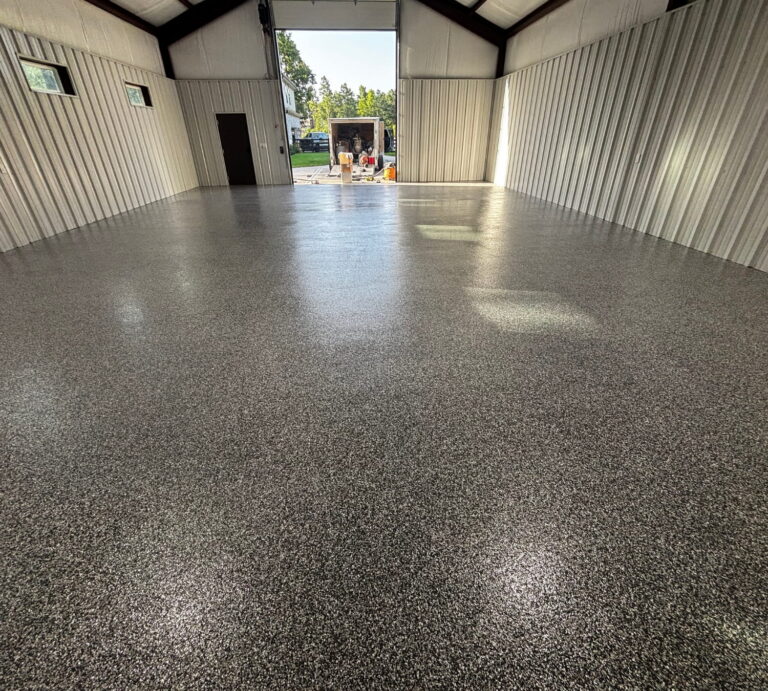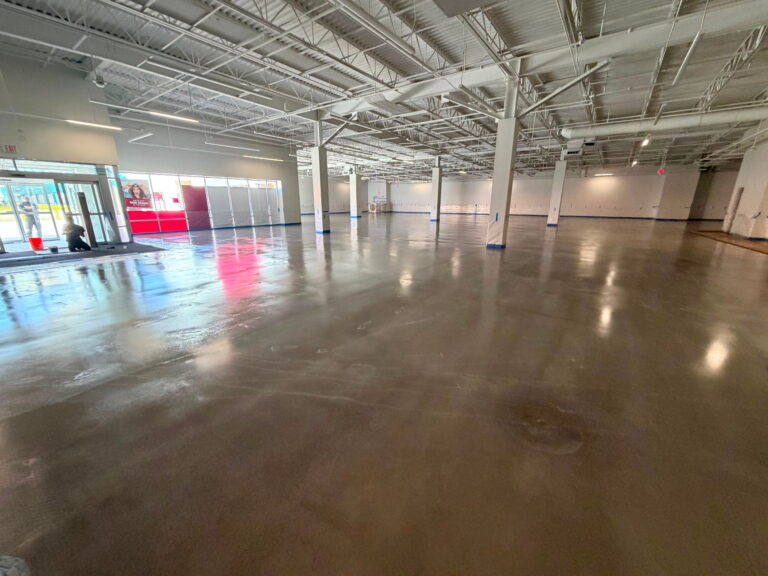
Not every floor needs to be a showstopper. For warehouses, distribution facilities, commercial kitchens, manufacturing spaces, and light-industrial environments in Seguin, San Marcos, and across the greater San Antonio corridor, what matters is a floor that performs consistently, resists the specific chemicals and traffic it faces every day, and looks clean and professional for years without demanding ongoing attention. That’s the case for solid color epoxy — and it makes a compelling one.
What Solid Color Epoxy Actually Is
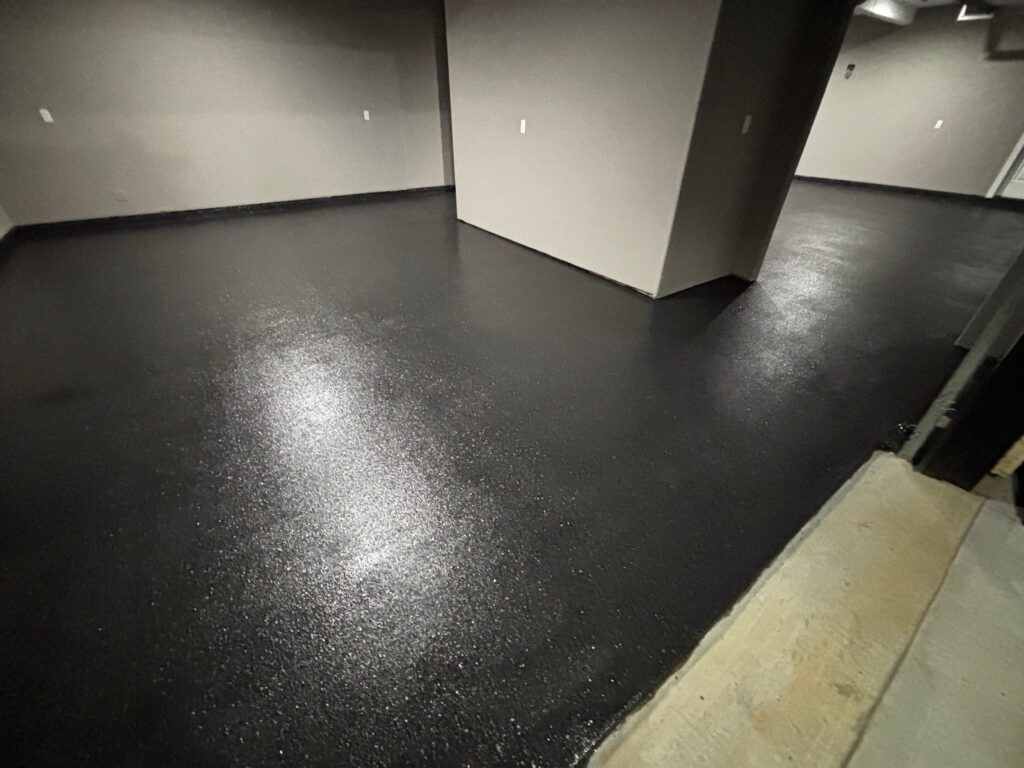
Solid color epoxy is a two-component (epoxy resin plus hardener) floor coating system applied in uniform pigmented layers, finished with a clear or pigmented polyaspartic topcoat. Unlike decorative systems that use broadcast aggregates or metallic pigments, solid color epoxy delivers a smooth, uniform surface in a single consistent color. The simplicity of the system is its strength: nothing to go visually wrong, full control over finish, and maximum build thickness for a given budget.
Performance Specs That Matter for Commercial Spaces
| Property | Solid Color Epoxy (2-component) | Floor Paint | Water-Based 1-Part Epoxy |
|---|---|---|---|
| Tensile strength | 6,000–10,000 psi | 500–1,000 psi | 1,500–2,500 psi |
| Chemical resistance | Excellent | Poor | Moderate |
| Abrasion resistance | Excellent | Poor | Moderate |
| Expected lifespan | 15 – 20+ years | 1 – 3 years | 3 – 5 years |
| Total installed cost/sq ft | $3.50 – $5.50 | $0.75 – $1.50 | $1.50 – $3.00 |
The performance gap between true two-component epoxy and the floor paints sold at big-box stores is not incremental — it’s categorical. The tensile bond strength of a properly prepared and installed commercial epoxy system exceeds the tensile strength of the concrete it’s bonded to, meaning the concrete fails before the coating separates from it. That’s the standard CB1 holds on every commercial project.
Color Selection and Line Marking
Solid color systems support the full range of industrial color standards, including safety yellow, OSHA orange, and custom corporate colors. For warehouses and manufacturing facilities, solid color epoxy integrates naturally with line-striping systems: after the base coat cures, traffic lanes, pedestrian walkways, equipment zones, and safety boundaries can be marked with compatible epoxy line paint for a clean, durable layout that won’t peel with forklift traffic.
Maintenance: As Simple as the System
A smooth solid color epoxy floor is arguably the easiest commercial floor to maintain. Dust mopping removes particulates. Auto-scrubbers with neutral pH solution handle general cleaning. Spills of most industrial chemicals wipe up without staining or etching. There is no wax to strip, no grout to clean, no tile edges to catch dirt. For facility managers tracking total cost of ownership, this simplicity translates to measurable labor savings over time.
Frequently Asked Questions
What colors are available for solid color epoxy?
CB1 can match virtually any color including standard RAL, Pantone, or custom corporate colors. Common choices for commercial spaces include battleship gray, tile red, safety yellow, dove white, and light blue. Multiple colors can be used in the same facility for zoning.
How long does a commercial solid color epoxy installation take?
A 5,000–10,000 sq ft commercial space typically takes 3–5 days for surface prep, two epoxy coats, and a topcoat. CB1 can schedule phased installations to keep operational sections of your facility running during the work.
Can solid color epoxy be applied over an existing epoxy floor?
Sometimes yes, if the existing coating is well-bonded and in good condition. The existing surface is mechanically abraded to create a profile for adhesion. Failed or delaminating coatings must be removed before a new system is applied.
Is solid color epoxy suitable for food-safe environments?
Two-component epoxy systems, once fully cured, are non-toxic and meet FDA requirements for incidental food contact. For commercial kitchen and food processing environments, CB1 selects cove-base-compatible formulations that eliminate the wall-floor joint where bacteria and moisture accumulate.
Ready to transform your concrete? Get a free, no-pressure estimate from CB1 Specialty Concrete — San Antonio’s prep-first epoxy and polished-concrete experts, backed by a 15-year warranty.
REQUEST A FREE ESTIMATE
Free Estimate
Want this floor in your space?
We measure, inspect the slab, and give you a real number — no obligation.