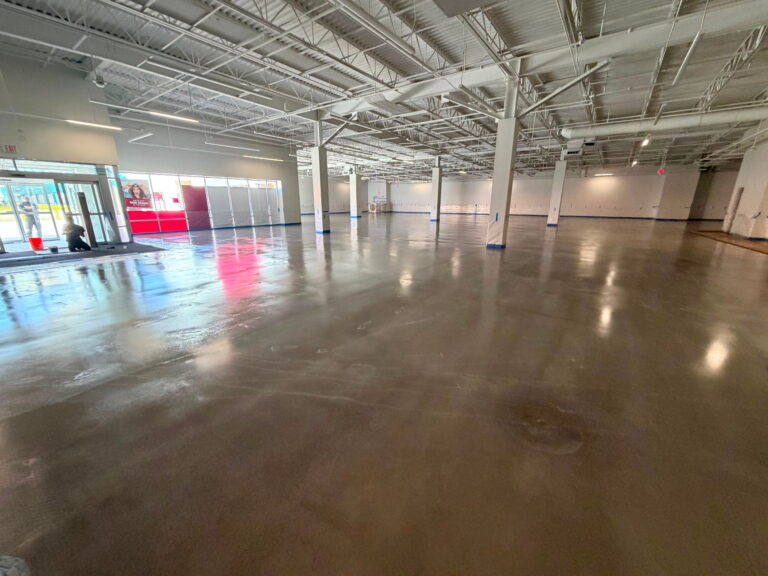
An automotive shop floor faces conditions that would destroy most commercial flooring within months: motor oil and transmission fluid that penetrate and stain; battery acid, brake fluid, and degreasers that chemically attack most coatings; vehicles being driven onto hot tires directly from highways; floor jacks and lifts concentrating thousands of pounds on small contact points; and daily pressure washing. For automotive shops in Austin and San Antonio, only the highest-grade industrial epoxy systems deliver acceptable performance.
What Automotive Environments Demand from Flooring
The performance requirements for an auto shop floor aren’t aspirational — they’re operational. A floor that stains from oil doesn’t look professional to customers. A floor that delaminates creates a trip hazard and a liability. A floor that degrades under hot-tire contact needs constant maintenance. The right system prevents all of these issues and, importantly, looks clean to a customer dropping off their vehicle — something that directly affects their confidence in your shop.
System Specifications for Automotive Facilities
| Requirement | CB1 Automotive System | Standard Epoxy |
|---|---|---|
| Motor oil resistance | Excellent (non-porous topcoat) | Good (can stain if not wiped) |
| Battery acid resistance | Excellent (polyaspartic topcoat) | Moderate (etches over time) |
| Hot-tire resistance | Excellent | Poor-Moderate (standard systems) |
| Impact resistance (jack stands) | Excellent (high build) | Moderate |
| Pressure wash compatibility | Excellent | Good (moderate pressure) |
| Total film build | 25 – 40+ mils | 10 – 15 mils |
The Appearance Advantage
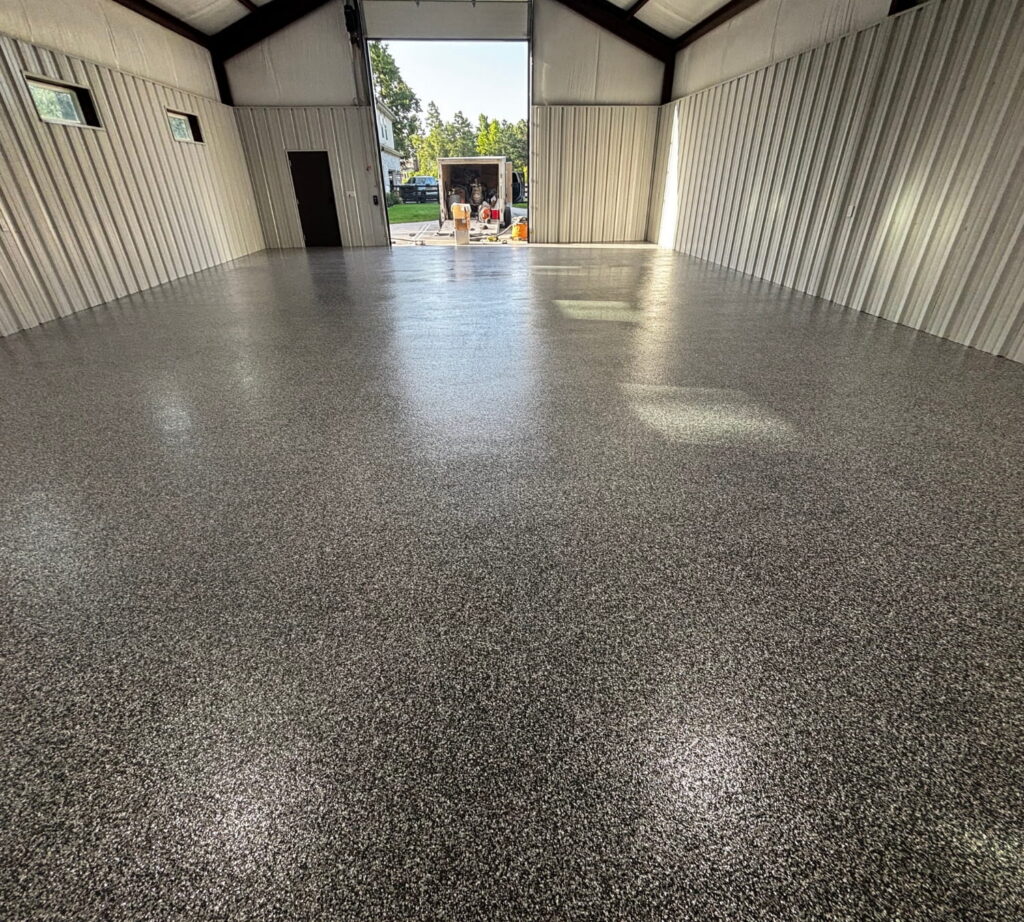
A clean, bright, professionally coated shop floor does something that bare concrete can never do: it makes your facility look like the quality operation it is. Light-colored solid floors dramatically improve lighting by reflectivity, reducing eyestrain during detailed work. The seamless, easy-to-clean surface means technicians spend less time cleaning and more time wrenching. In Austin’s competitive automotive market, the shop environment is part of the brand — and quality flooring is a visible signal of quality service.
Line Marking and Zone Designation
Automotive shops benefit significantly from painted zone markings: service lanes, lift areas, parts storage zones, pedestrian walkways, and safety boundaries can all be designated with compatible epoxy line paint applied over the base coating system. This isn’t just safety compliance — it’s workflow management, and shops that implement clear floor marking consistently report faster technician movement and fewer tool-finding inefficiencies.
Downtime Management
For operating automotive facilities, floor installation downtime is a real business cost. CB1 works with shop owners to phase installations — typically doing half the shop floor while the other half remains operational, then switching — to minimize impact on booked appointments. CB1 will provide a phasing plan during the consultation for any shop that cannot close for the full installation period.
Frequently Asked Questions
Can you coat a shop floor that has years of oil soaked into the concrete?
Yes, but heavy oil contamination requires additional preparation steps: degreasing, grinding to remove the contaminated concrete surface layer, and sometimes a specialized oil-tolerant primer. CB1 will assess the contamination level and include appropriate prep costs in the quote.
What happens when a floor jack is dropped or an impact wrench falls?
High-build industrial epoxy systems absorb impact without cracking better than thin-film systems. Point impacts from dropped tools may leave minor indentations in the coating but rarely penetrate to the concrete below. Impact damage can be spot-repaired without full floor replacement.
How long before vehicles can drive onto a freshly coated shop floor?
Light foot traffic is typically possible 24 hours after the final coat. Vehicle traffic and normal shop operations can resume after 72 hours. CB1 will provide specific cure milestones based on the system installed and ambient temperatures.
Do you install floor drains and trench covers during a shop floor installation?
CB1 installs flooring around existing drains and trench covers. For new drain installations or trench excavation, CB1 can coordinate with plumbing contractors. Drains are protected during coating application and reinstated during cleanup.
Ready to transform your concrete? Get a free, no-pressure estimate from CB1 Specialty Concrete — San Antonio’s prep-first epoxy and polished-concrete experts, backed by a 15-year warranty.
REQUEST A FREE ESTIMATE
Free Estimate
Want this floor in your space?
We measure, inspect the slab, and give you a real number — no obligation.