No floor in any industry works harder than a restaurant floor. From the moment the kitchen opens until the last table turns, it takes constant foot traffic, grease, hot water, cleaning chemicals, dropped dishes, rolling carts, and — in the front of house — the judgmental first impression of every guest. A restaurant floor that fails any one of those tests costs you: a health violation, a slip-and-fall workers’ comp claim, or a customer who photographs the cracked tile and posts it. For restaurant operators in New Braunfels and across the San Antonio area, every zone of the floor requires a deliberate, zone-specific flooring decision.
Zone-by-Zone Flooring Strategy
Restaurants have distinct zones with distinct flooring requirements. The right approach treats each zone separately rather than specifying one floor for the entire building.
| Zone | Primary Requirements | Recommended System |
|---|---|---|
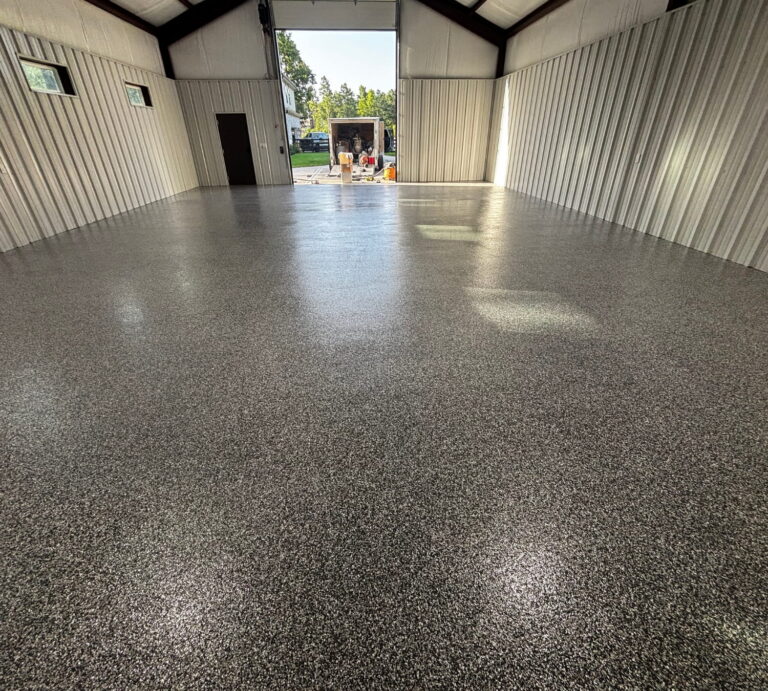
| Kitchen / prep area | Slip resistance, chemical resistance, seamless, cove base | Quartz broadcast epoxy or urethane mortar |
| Bar / beverage station | Slip resistance, alcohol and citrus resistance, easy cleaning | Quartz epoxy with anti-slip aggregate |
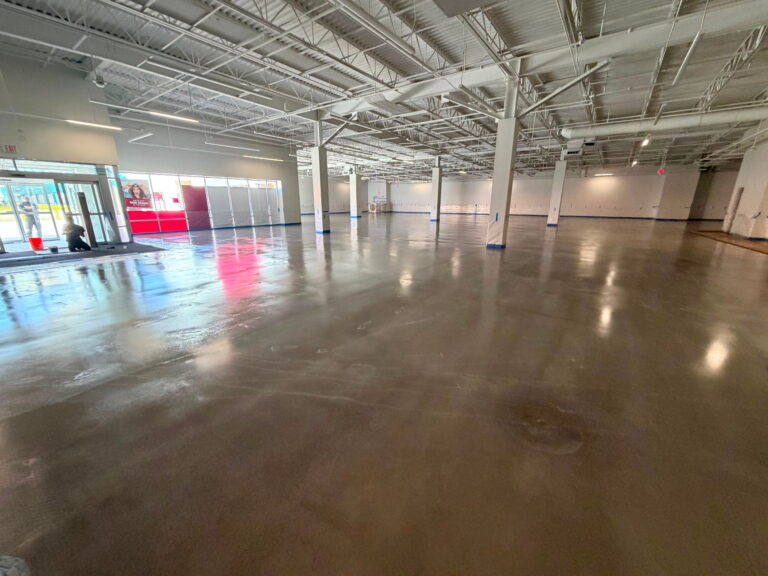
| Dining room | Aesthetics, chair/table leg resistance, easy mopping | Polished concrete or decorative epoxy |
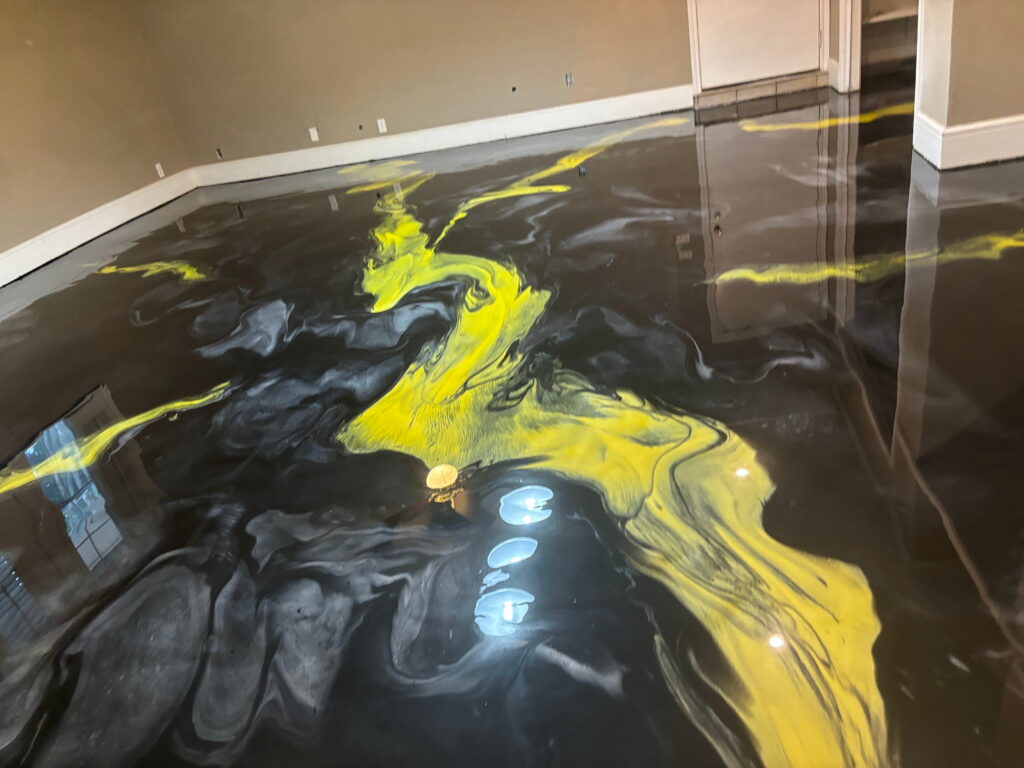
| Entry / hostess area | First impression, durability, dirt-hiding finish | Polished concrete or metallic accent |
| Restrooms | Waterproof, slip-resistant, seamless, sanitary | Quartz epoxy with full cove base |
| Walk-in cooler / freezer | Thermal shock resistance, non-slip when wet/icy | MMA or polyaspartic with aggregate |
| Receiving / dry storage | Durability, cleanability, pest-evidence (light color) | Solid color epoxy or polished concrete |
Health Code Compliance: What the Texas DSHS Requires
Texas food service regulations require kitchen and food-prep floors to be smooth, non-absorbent, easily cleanable, and in good repair. The grout lines in quarry tile or ceramic tile — however new — are a chronic compliance weakness: they harbor grease, bacteria, and biofilm that resists even aggressive cleaning. A seamless quartz or urethane mortar epoxy floor eliminates this entirely, presenting a continuous, non-porous surface that inspectors and sanitarians prefer over any tile system. The integral cove base — a curved transition from floor to wall — eliminates the 90° wall-floor joint where debris and moisture accumulate and bacteria colonize.
Slip Resistance: Protecting Your Staff and Your Business
The Bureau of Labor Statistics consistently identifies slips and falls as the leading cause of restaurant worker injuries. In Texas, workers’ comp claims from kitchen slip-and-fall incidents average $15,000–$40,000 per incident including medical costs and lost productivity. A quartz broadcast epoxy floor with a wet COF of 0.75+ (versus the ADA minimum of 0.60) dramatically reduces this risk — and can be documented for your insurance carrier as a proactive safety measure. CB1 provides COF certification data for all systems installed in food service environments.
The Front-of-House Opportunity
While the kitchen demands compliance and safety, the dining room demands something different: brand expression. In New Braunfels’ competitive restaurant scene — from the Gruene Historic District to the Canyon Lake corridor — a polished concrete or decorative epoxy dining room floor reads as intentional, premium, and on-brand. It photographs well for social media, ages gracefully, and cleans faster after service than carpet or hardwood. The investment in a quality dining room floor pays dividends in atmosphere, guest perception, and reduced labor at closing.
Frequently Asked Questions
Do epoxy floors pass health department inspections in Texas?
Yes. Properly installed seamless epoxy systems meet all Texas DSHS food service flooring requirements. CB1 is familiar with San Antonio Metro Health Department standards and specifies systems accordingly. A seamless floor is consistently cited by inspectors as preferable to tile for kitchen and food prep areas.
Can you install new restaurant flooring without closing the entire restaurant?
Yes, in many cases. CB1 has experience phasing restaurant installations — coating the kitchen during a scheduled closure while front-of-house remains open, or working overnight between service hours. A detailed coordination plan is developed during the consultation.
How do restaurant epoxy floors hold up to repeated pressure washing?
A properly installed quartz or urethane mortar system with a polyaspartic topcoat handles daily commercial pressure washing without issue. Film build, inter-coat adhesion, and substrate prep determine how well a system survives repeated high-pressure cleaning — which is another reason quality installation matters more than material cost alone.
What’s the cost to floor a typical restaurant kitchen in San Antonio?
A 500–1,000 sq ft commercial kitchen with a quartz epoxy broadcast system and integral cove base typically runs $8,000–$16,000 installed. Dining room flooring with polished concrete runs $3–$7/sq ft depending on size and existing slab condition. CB1 provides detailed quotes by zone after a free on-site assessment.
Ready to transform your concrete? Get a free, no-pressure estimate from CB1 Specialty Concrete — San Antonio’s prep-first epoxy and polished-concrete experts, backed by a 15-year warranty.
REQUEST A FREE ESTIMATE
Free Estimate
Want this floor in your space?
We measure, inspect the slab, and give you a real number — no obligation.