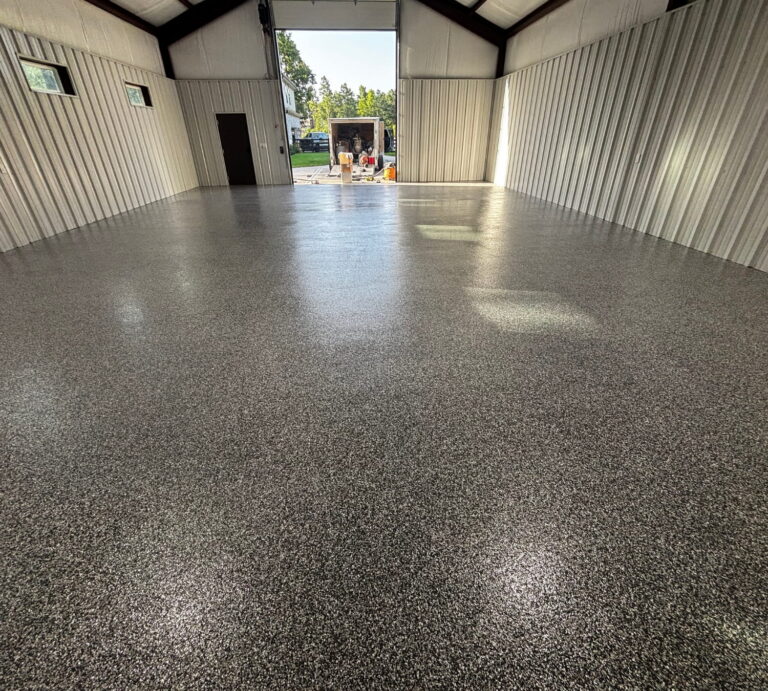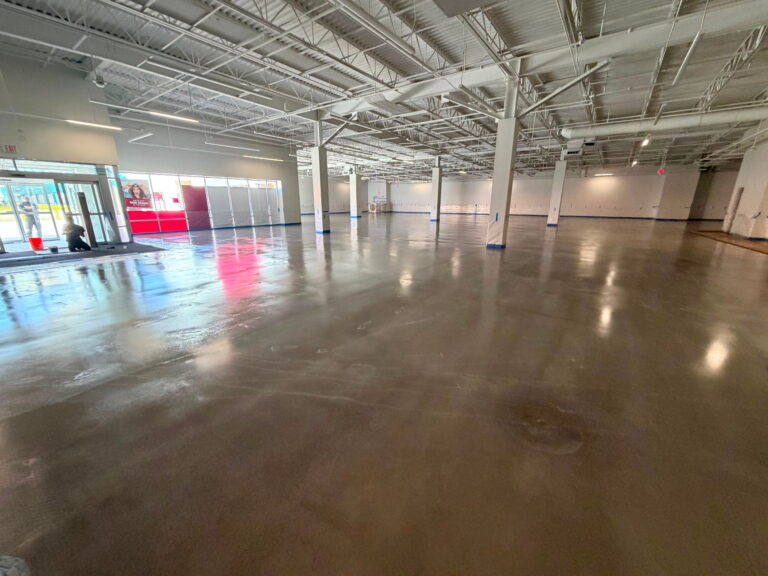
The automotive industry encompasses more distinct flooring environments than almost any other sector. A dealership showroom floor needs to look like a luxury interior and hold up to customer foot traffic and vehicles on display. A service bay endures motor oil, transmission fluid, battery acid, hot tires, lift pads, and daily pressure washing. A body shop faces paint overspray, solvents, and body filler dust. A quick-lube center needs a floor that instills confidence in customers watching technicians work. For automotive businesses in Seguin, San Antonio, and across the I-10 corridor, getting the floor right in every zone matters — both operationally and commercially.
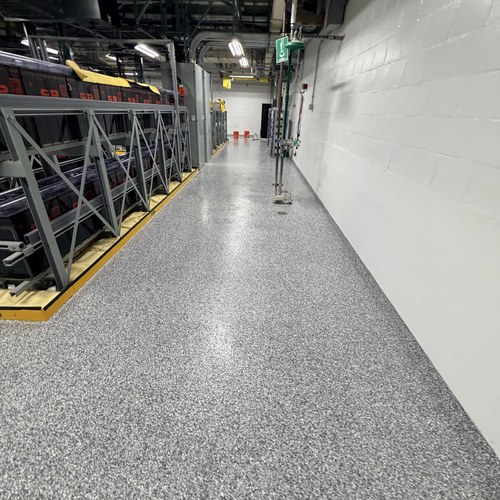
Automotive Flooring by Facility Type
| Facility Type | Primary Exposures | Recommended System | Cost/sq ft |
|---|---|---|---|
| Dealership showroom | Customer traffic, vehicles on display, UV exposure | Polished concrete or metallic epoxy | $5 – $11 |
| Service / repair bay | Oil, hydraulic fluid, battery acid, hot tires, lifts | High-build quartz broadcast epoxy | $7 – $11 |
| Body shop / paint prep | Solvents, paint, body filler, abrasion | Chemical-resistant novolac epoxy | $8 – $13 |
| Quick-lube / oil change | Motor oil, trans fluid, visual cleanliness critical | Light-colored solid epoxy + poly topcoat | $5 – $8 |
| Car wash / detail bay | Constant water, detergents, hot water, slip risk | Quartz or polyaspartic aggregate broadcast | $6 – $10 |
| Parts warehouse / storage | Forklift, shelving loads, dust control | Standard industrial epoxy | $4 – $7 |
The Showroom Floor as a Sales Tool
Automotive dealerships understand brand presentation, and the showroom floor is a central element of that brand. A polished concrete or metallic epoxy floor in a vehicle showroom creates a surface that reflects the vehicles displayed on it, dramatically enhancing their visual impact. The floor becomes part of the product display — and customers notice. Dealerships that invest in showroom flooring consistently report that the environment contributes to customer confidence in the brand’s quality standards.
Service Bay Requirements: No Shortcuts
Service bays face conditions that demand the highest-grade industrial systems. The combination of motor oil (which penetrates and stains), hot-tire contact (which can mark or lift lesser coatings), lift pad point loads, and daily pressure washing eliminates every budget flooring option from contention. CB1 specifies a minimum 40-mil broadcast quartz system with a polyaspartic topcoat for service bays — the same chemistry used in commercial aviation maintenance facilities. A light-colored system (light gray or bone white) is specified by default because it reveals oil drips immediately, motivating prompt cleanup that protects the floor and signals professionalism to customers watching through glass.
Chemical Resistance in Body Shops
Auto body shops present a distinct challenge: paint solvents (lacquer thinner, acetone, xylene) are among the most aggressive chemicals any epoxy system faces. Standard bisphenol-A epoxy chemistry is vulnerable to concentrated solvent contact. CB1 specifies novolac epoxy formulations for body shop environments — a higher cross-link-density chemistry that resists solvent attack and color change even with repeated exposure. The topcoat selection is equally important: polyaspartic topcoats outperform standard urethane under solvent exposure conditions.
Frequently Asked Questions
How often do auto shop epoxy floors need to be replaced?
A properly installed high-build system in a standard service bay lasts 10–15 years with routine maintenance. High-traffic lift areas and driving aisles may show wear patterns at 8–10 years and can receive a maintenance topcoat. Dramatic underbidding by competitors that cuts the build thickness is the primary cause of premature service bay failures.
Can you coat a shop floor that has existing oil saturation from years of use?
Yes, with the right preparation. CB1 uses a combination of degreasing, diamond grinding (which removes the oil-contaminated concrete surface), and oil-tolerant primer where needed. The extent of contamination affects preparation cost, which is assessed and quoted separately after inspection.
What color should an auto shop floor be?
Light gray, medium gray, or light beige are the most practical choices for service areas — they show oil drips promptly (unlike dark colors that hide contamination until it’s widespread) while concealing minor tire marks and foot traffic patterns. Showroom areas often match brand colors or use architectural neutrals that complement the vehicle display.
Is a permit required to coat a commercial automotive shop floor in San Antonio?
Generally no permit is required for floor coating installation, which is a maintenance improvement rather than structural work. CB1 handles any required notifications as part of the project scope. Contact CB1 if your facility has specific regulatory requirements (hazardous materials storage, environmental compliance) that should be factored into the flooring specification.
Ready to transform your concrete? Get a free, no-pressure estimate from CB1 Specialty Concrete — San Antonio’s prep-first epoxy and polished-concrete experts, backed by a 15-year warranty.
REQUEST A FREE ESTIMATE
Free Estimate
Want this floor in your space?
We measure, inspect the slab, and give you a real number — no obligation.