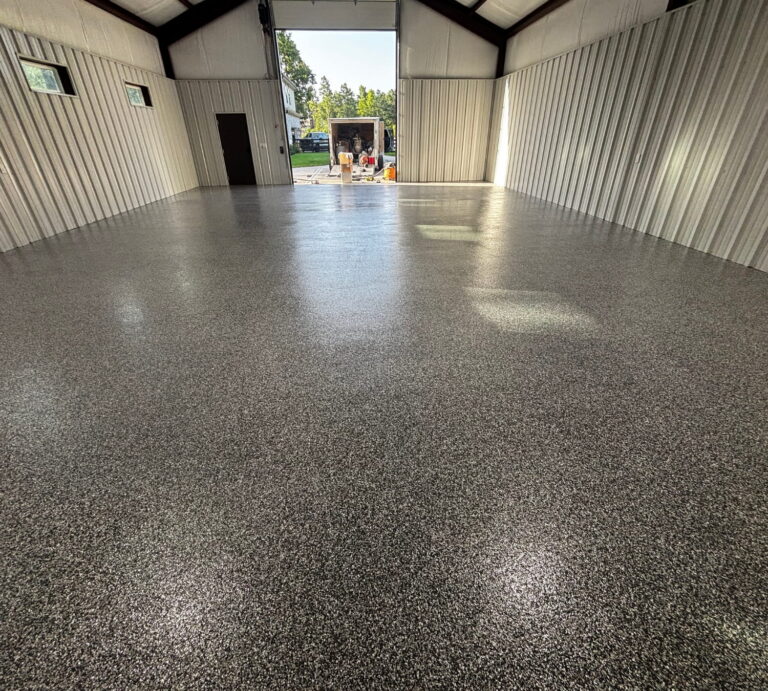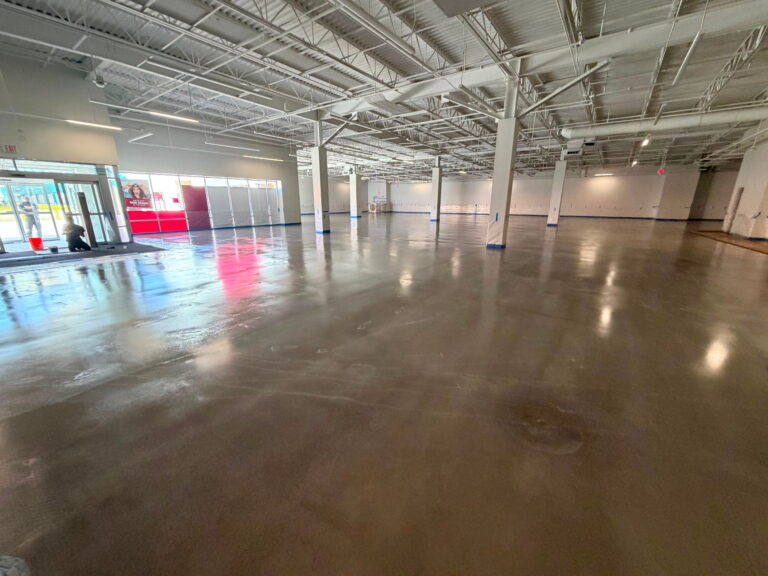
When most people think of food service flooring compliance, they picture a restaurant kitchen. But the Texas food service industry covers a much broader landscape: school cafeterias serving thousands of students daily, grocery store delis and bakeries, commercial commissaries producing food at scale, catering facilities, food trucks and mobile kitchens (which have their own floor requirements), and institutional feeding operations in hospitals, universities, and correctional facilities. Each has distinct health code exposure, cleaning protocols, and flooring requirements. San Antonio’s large and growing food service industry — driven by its military installation population, tourism sector, and rapid residential growth — demands that operators in each of these categories get the floor right.
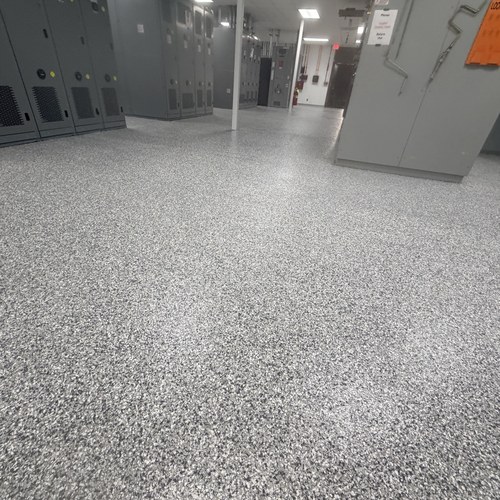
Texas DSHS Food Service Flooring Requirements by Facility Type
| Facility Type | Key Flooring Requirements | Recommended System |
|---|---|---|
| Restaurant kitchen | Smooth, non-absorbent, easily cleanable, cove base required | Quartz epoxy broadcast or urethane mortar |
| Commercial commissary | Same as restaurant kitchen + food-grade material certification | Urethane mortar or quartz epoxy, FDA-compliant formulation |
| Grocery store deli/bakery | Non-absorbent, slip-resistant, cleanable with commercial equipment | Quartz epoxy or polished concrete with sealer |
| School cafeteria | Slip-resistant, durable under heavy cart traffic, cleanable | Quartz epoxy or high-build solid color epoxy |
| Institutional kitchen (hospital/uni) | Seamless, chemical-resistant, cove base, thermal shock tolerant | Urethane mortar with polyaspartic topcoat |
| Food truck / mobile kitchen | Non-slip, cleanable, certified materials, typically small area | Thin-build polyaspartic or quartz system |
The Cove Base Requirement: Why It Matters
One of the most consistently cited health code items in food service is the floor-to-wall cove base: a curved, radius transition from the floor surface to the wall that eliminates the 90° angle where food debris, grease, and moisture accumulate. In an open 90° joint, cleaning tools can’t reach, moisture hides, and bacteria colonize regardless of how aggressively the floor is mopped. A proper integral epoxy cove base — installed as part of the floor coating system — solves this permanently. CB1 includes cove base as a standard component of every food service floor installation.
Pathogen Control: Beyond Visual Cleanliness
Health code compliance is about pathogen control, not just visible cleanliness. A floor that looks clean but has micro-porosity — tiny surface defects where bacteria can harbor protected from cleaning solutions — fails the underlying purpose of the requirement. Properly installed seamless epoxy systems with fully cured, cross-linked topcoats present a surface with essentially zero porosity, where cleaning solutions contact all contaminated areas equally. This is the technical reason health sanitarians prefer seamless epoxy to tile grout: it’s not aesthetics — it’s microbiology.
Cleaning Protocol Compatibility
Food service facilities use aggressive cleaning chemistry: high-pH degreasers, quaternary ammonium disinfectants, iodine-based sanitizers, and in some facilities, chlorine dioxide systems. The coating system must be specified with documented resistance to these specific chemicals at use concentrations. CB1 provides chemical resistance documentation for every food service system installed, matching the specification to the facility’s actual cleaning protocol.
Frequently Asked Questions
Does an epoxy floor need to be resealed periodically in a food service environment?
A properly installed two-component epoxy system with a polyaspartic topcoat does not require periodic resealing. The topcoat is integral to the system — it’s not a surface sealer applied over the floor. After 7–12 years of heavy service, a maintenance topcoat may be applied to restore surface quality, but this is different from resealing.
What happens if hot water (180°F+) is regularly used to clean the floor?
Standard epoxy can soften under repeated contact with 180°F+ water used in commercial steam cleaning and pressure washing. CB1 specifies urethane mortar or polyaspartic systems for facilities with steam cleaning protocols — these chemistries handle thermal shock significantly better than standard epoxy base coats.
Are there food-grade certified epoxy systems?
Yes. Epoxy formulations with FDA 21 CFR compliance documentation are available for facilities producing food at scale where incidental food contact with the floor surface is possible. CB1 specifies FDA-compliant formulations for commercial commissaries and food manufacturing environments. Documentation is provided with every installation for compliance records.
How does flooring affect a food service inspection score?
Texas food service inspections deduct points for floors that are not smooth, non-absorbent, in poor repair, or lacking proper cove base. A seamless epoxy system in good condition eliminates these deductions entirely. Facilities that switch from tile to seamless epoxy consistently report improved inspection outcomes in the floor-related categories.
Ready to transform your concrete? Get a free, no-pressure estimate from CB1 Specialty Concrete — San Antonio’s prep-first epoxy and polished-concrete experts, backed by a 15-year warranty.
REQUEST A FREE ESTIMATE
Free Estimate
Want this floor in your space?
We measure, inspect the slab, and give you a real number — no obligation.