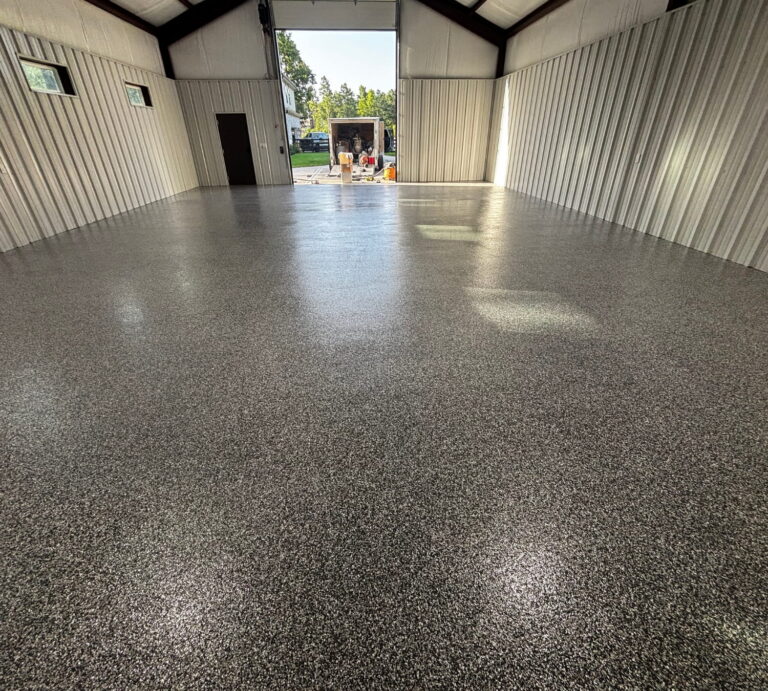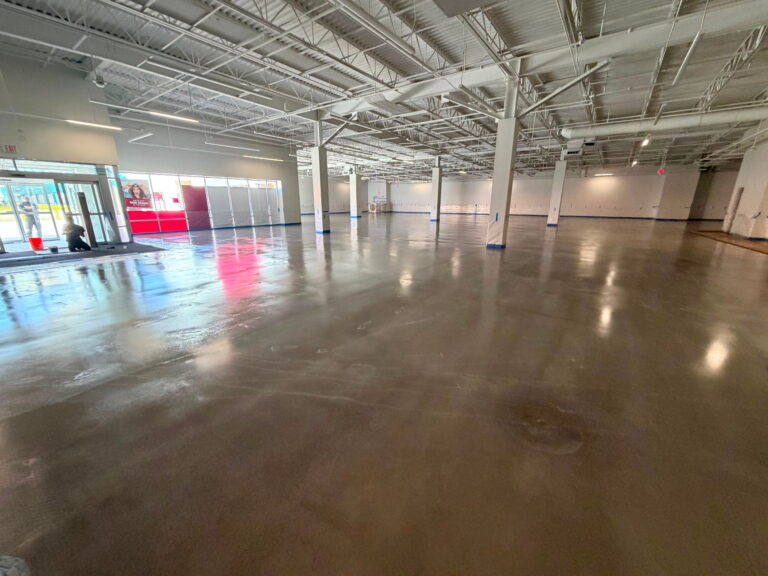
The San Antonio Medical Center is one of the largest healthcare complexes in the United States, and the city’s rapid population growth is driving expansion of clinical space throughout Bexar and surrounding counties. Every new and renovated healthcare facility faces the same fundamental flooring challenge: the floor must support the infection control program, survive aggressive daily cleaning and disinfection, accommodate the mechanical demands of rolling patient equipment, and maintain the professional environment that signals quality care to patients and families. These requirements together make healthcare flooring one of the most technically demanding categories in commercial construction.
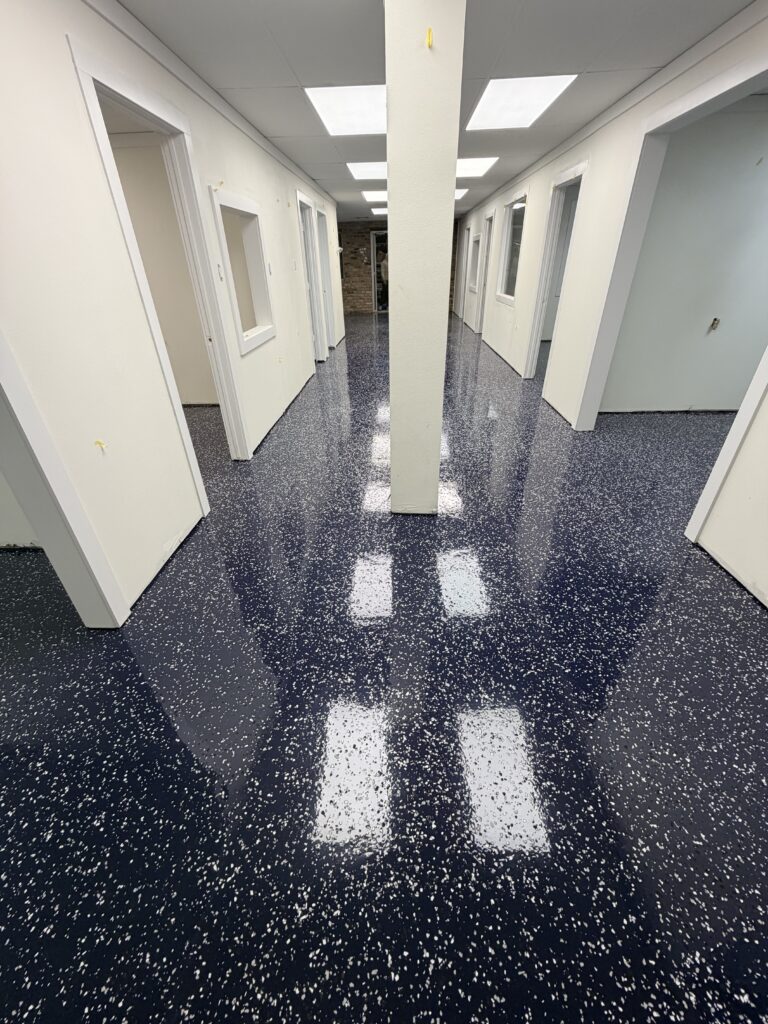
Infection Control Requirements by Healthcare Zone
| Zone | ICRA Category | Flooring Priority | Recommended System |
|---|---|---|---|
| General patient rooms | Class I–II | Cleanability, slip resistance | Quartz epoxy or sheet vinyl |
| Procedure / treatment rooms | Class II–III | Seamless, chemical resistance | Seamless quartz epoxy with cove base |
| Operating rooms / sterile areas | Class IV | Static control, seamless, cleanable | Conductive or dissipative epoxy |
| Sterile processing / CSR | Class III–IV | Chemical resistance, thermal shock | Urethane mortar or novolac epoxy |
| Lab / pathology | Class III | Chemical resistance, seamless | Chemical-resistant epoxy with cove base |
| Corridors / lobbies | Class I | Durability, rolling load, aesthetics | Polished concrete or decorative epoxy |
| Dietary / food service | Class II | Slip resistance, FDA-compatible | Quartz epoxy or urethane mortar |
The Grout Line Problem in Clinical Settings
Ceramic and quarry tile remain common in healthcare facilities built before the early 2000s, and they present a persistent infection control challenge. Grout is porous, discolors with disinfectants over time, and provides harbor for bacterial biofilm that resists even aggressive cleaning. The CDC and HICPAC infection control guidelines acknowledge that seamless floor surfaces are preferable to tile in high-risk clinical areas precisely because they eliminate grout-line pathogen harborage. For healthcare facility managers planning renovations, transitioning from tile to seamless epoxy is an infection control improvement, not merely a cosmetic upgrade.
Cleaning Chemistry Compatibility
Healthcare environments use some of the most aggressive disinfection chemistries of any building type: chlorine-based disinfectants (bleach solutions up to 1:10), quaternary ammonium compounds, hydrogen peroxide systems, peracetic acid formulations, and in some areas, UV-C disinfection robots with no chemistry but extreme UV exposure. CB1 specifies epoxy systems with documented resistance to each of these chemistries at clinical use concentrations and provides the technical data sheets for infection control documentation files.
Static Control in Critical Areas
Operating rooms, cardiac catheterization labs, and areas with sensitive electronic monitoring equipment require floors with controlled electrical resistance — specifically, static-dissipative (ESD) or conductive flooring that prevents electrostatic discharge that could interfere with equipment or, in rare cases, ignite flammable anesthetic gases. CB1 installs static-dissipative epoxy systems with measured and documented electrical resistance values, verified with ASTM F150 testing after installation.
Frequently Asked Questions
Can epoxy flooring be installed in a functioning hospital without displacing patient care?
Yes, with proper ICRA protocols. CB1’s commercial healthcare installation team follows Infection Control Risk Assessment procedures including containment barriers, HEPA air filtration, controlled egress, and coordination with the facility’s infection control officer. Installations are typically phased room-by-room or wing-by-wing to maintain continuous operations.
How long does a healthcare epoxy floor last under clinical cleaning conditions?
A properly specified clinical epoxy system — with a topcoat rated for the specific disinfectants in use — should last 10–15 years in general clinical areas. Sterile processing and chemistry-intensive labs may see shorter service life (7–10 years) depending on exposure intensity. Regular inspection and proactive maintenance topcoating extends the system life.
Are there antimicrobial epoxy flooring options?
Yes. Antimicrobial additives (silver-ion based or other biostatic agents) can be incorporated into the topcoat to reduce surface microbial populations between cleaning cycles. These are increasingly specified in high-risk clinical areas as an additional layer of infection control. CB1 can provide antimicrobial topcoat options with efficacy documentation.
What documentation does CB1 provide for Joint Commission accreditation purposes?
CB1 provides material data sheets, chemical resistance documentation, installer certifications, and as-built specifications for all healthcare floor installations. This documentation package is formatted to support the Environment of Care section of Joint Commission accreditation files.
Ready to transform your concrete? Get a free, no-pressure estimate from CB1 Specialty Concrete — San Antonio’s prep-first epoxy and polished-concrete experts, backed by a 15-year warranty.
REQUEST A FREE ESTIMATE
Free Estimate
Want this floor in your space?
We measure, inspect the slab, and give you a real number — no obligation.