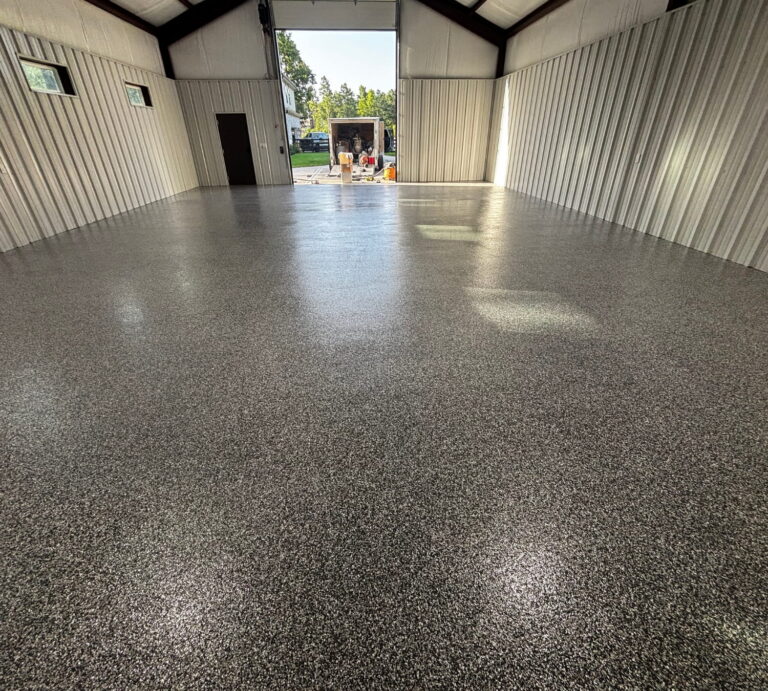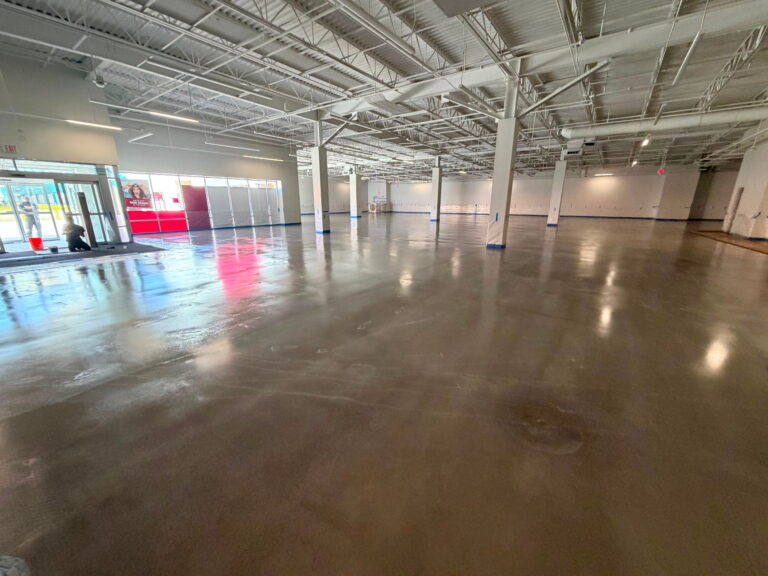
San Antonio’s fitness and sports facility market is booming — from boutique CrossFit boxes and yoga studios to large multi-sport recreation centers and school athletic facilities. Every one of them shares a common challenge: the floor takes more abuse per square foot than almost any other commercial environment, and when it fails, the consequences range from equipment damage to athlete injury. Choosing the right floor system for a sports facility isn’t about aesthetics first — it’s about biomechanics, safety, maintenance, and durability, in that order. Get those right and aesthetics naturally follow.
Sports Flooring by Facility Type
| Facility Type | Key Floor Requirements | Best System | Cost/sq ft |
|---|---|---|---|
| Weight room / free weights | Impact absorption, rubber compatibility, stain resistance | Epoxy base + rubber tile overlay, or high-build epoxy | $5 – $9 |
| Functional fitness / CrossFit | Impact from dropped weights, rubber mat areas, easy clean | High-build epoxy with rubber zone designations | $5 – $8 |
| Group fitness / yoga studio | Non-slip barefoot, warmth, easy clean, aesthetics | Decorative epoxy or polished concrete with area rugs | $4 – $7 |
| Multi-sport gym / rec center | Hardwood-substitute, marked courts, durable under sneakers | Sport coating over concrete or rubber flooring | $6 – $10 |
| Locker room / wet area | Slip resistance when wet, antimicrobial, seamless, easy clean | Quartz epoxy with antimicrobial topcoat | $6 – $9 |
| Pool surround / natatorium | Slip resistance (wet), chemical resistance (chlorine) | Polyaspartic aggregate broadcast | $6 – $9 |
Impact Resistance: The Weight Room Reality
A 300 lb barbell dropped from shoulder height generates significant impact energy when it hits the floor. Thin-film epoxy systems simply cannot absorb this — the energy transmits directly to the concrete below and, over time, causes both the coating and the concrete to crack and spall at impact zones. The standard solution in weight rooms is a hybrid approach: a high-build epoxy base coat (which seals the concrete and provides a stable substrate) with vulcanized rubber tile overlaid in the free weight and platform areas. The rubber absorbs impact, protects the concrete, and reduces noise. CB1 specifies and installs both the epoxy base and coordinates rubber overlay installation as a complete system.
Slip Resistance for Athlete Safety
Wet locker rooms and pool surrounds are among the highest-risk surfaces for slip-and-fall injuries in any commercial environment. A quartz broadcast epoxy system with aluminum oxide topcoat provides reliable wet traction that exceeds ADA minimums. This matters not just for liability management but for the athlete experience: surfaces that feel secure build confidence, while slippery surfaces create hesitation and compensation movement patterns that increase injury risk during training. CB1 measures and documents COF values on every sports wet-area installation.
Aesthetics and Brand Identity
Modern fitness facilities in San Antonio use their floor as a brand statement. Gym logos inlaid in epoxy, team colors defining training zones, bold court lines with premium line paint — these design elements cost relatively little compared to the total floor installation but dramatically enhance the facility’s visual identity and member experience. CB1 works with facility designers and brand managers to translate visual concepts into durable floor realities, providing digital mockups before any material touches the floor.
Frequently Asked Questions
Can epoxy floors handle the heat generated by exercise equipment like treadmills?
Standard cardio equipment doesn’t generate enough localized heat to affect epoxy flooring. Equipment feet and leveling pads do cause point loads that, over years, can leave impressions in softer coatings — CB1 recommends equipment mats under heavy cardio equipment as a protective measure that also reduces vibration transmission.
How do you clean a sports facility epoxy floor effectively?
Daily dust mopping, a weekly auto-scrubber pass with neutral pH cleaner, and prompt cleanup of sweat, chalk, and supplement spills is all a well-installed epoxy sport floor requires. Avoid bleach-based cleaners in regular maintenance — they dull the topcoat over time and are unnecessary for routine cleaning. Quarterly disinfection with a dilute quaternary ammonium solution is appropriate for locker rooms and wet areas.
Can court lines and logos be added after the base floor is installed?
Yes. Court lines, logo inlays, and zone designations can be applied as a second phase over a cured epoxy base coat. This is actually the recommended sequence: install the base system, allow full cure, then apply the decorative elements. CB1 coordinates the measurement, layout, and line painting as a complete service.
What’s the lifespan of a sports facility epoxy floor under heavy use?
A high-build system in a busy commercial fitness facility typically lasts 8–12 years before a maintenance topcoat is warranted. Very high-traffic areas like entrance zones and machine cardio areas may show wear earlier. The rubber overlay areas require separate maintenance timelines. CB1 provides a facility-specific maintenance schedule after installation.
Ready to transform your concrete? Get a free, no-pressure estimate from CB1 Specialty Concrete — San Antonio’s prep-first epoxy and polished-concrete experts, backed by a 15-year warranty.
REQUEST A FREE ESTIMATE
Free Estimate
Want this floor in your space?
We measure, inspect the slab, and give you a real number — no obligation.